Category: Metabolic Health

  • CGM for Weight Loss Without Diabetes: What the Evidence Shows

    CGM for Weight Loss Without Diabetes: What the Evidence Shows

    Evidence review note: This review of CGM for weight loss is the English-language edition of an Aether Health evidence review originally published in Korean. It uses the same evidence base and conclusions, with terminology and practical questions adapted for U.S. readers. Material differences will be documented when either edition is updated.

    Quick answer: A continuous glucose monitor (CGM) may help some adults without diabetes change eating or activity habits when it is used inside a structured program. But the evidence does not show that simply wearing a sensor reliably causes weight loss. A 2026 systematic review included 23 studies and 1,074 participants without diabetes, yet only three studies contributed to its pooled BMI analysis—and that analysis did not find a statistically clear BMI benefit. Original review.

    Which effect is being estimated? A trial with similar nutrition support in both arms, but visible versus blinded CGM data, estimates the added effect of access to glucose feedback within that care setting. It does not test an unsupported sensor alone. A sensor-plus-coaching package versus a different control cannot identify the sensor’s separate contribution. Basiri’s 30-person, 30-day trial illustrates the first comparison; its participants had prediabetes, so it should not be generalized automatically to normal-glucose adults. Original trial abstract and comparison conditions.

    Published: September 16, 2026 · Original evidence review: September 16, 2026 · Targeted source check: October 6, 2026 · Editorial clarification last updated: October 11, 2026
    Written and edited by: Denny Jaeyong Choi (JD), INSEAD MBA
    Scientific review of the September 16 version: Pierre Theurey, PhD

    Key takeaways

    • “Twenty-three studies” does not mean 23 weight-loss trials. The studies asked different questions, and only three were pooled for BMI.
    • Several recent randomized trials reported encouraging short-term weight results, particularly when CGM was combined with nutrition counseling, exercise, an app, or professional coaching.
    • Package trials cannot separate sensor and support effects. Trials with similar support in both groups give a closer estimate of the added value of CGM feedback, but do not establish benefit from unsupported sensor use.
    • One 24-week pilot trial found no additional weight loss from CGM, reminding us that results are not uniformly positive.
    • The most defensible interpretation is that CGM can be a biofeedback tool for some people—not a stand-alone fat-loss treatment or a proven requirement for long-term weight maintenance.

    You eat lunch, open an app, and watch the glucose line rise. After dinner, you take a walk and see the line flatten. That immediate feedback feels persuasive. But two questions are easy to blur together:

    1. Can a sensor show how glucose changes after meals, sleep, stress, or activity?
    2. Does seeing those changes help a person lose more weight—and keep it off?

    The answer to the first question is clearly yes: displaying glucose patterns is what a CGM does. The second question is much less settled. This review focuses on adults who do not have diagnosed diabetes and are considering CGM for weight management, not on people using CGM as part of diabetes treatment.
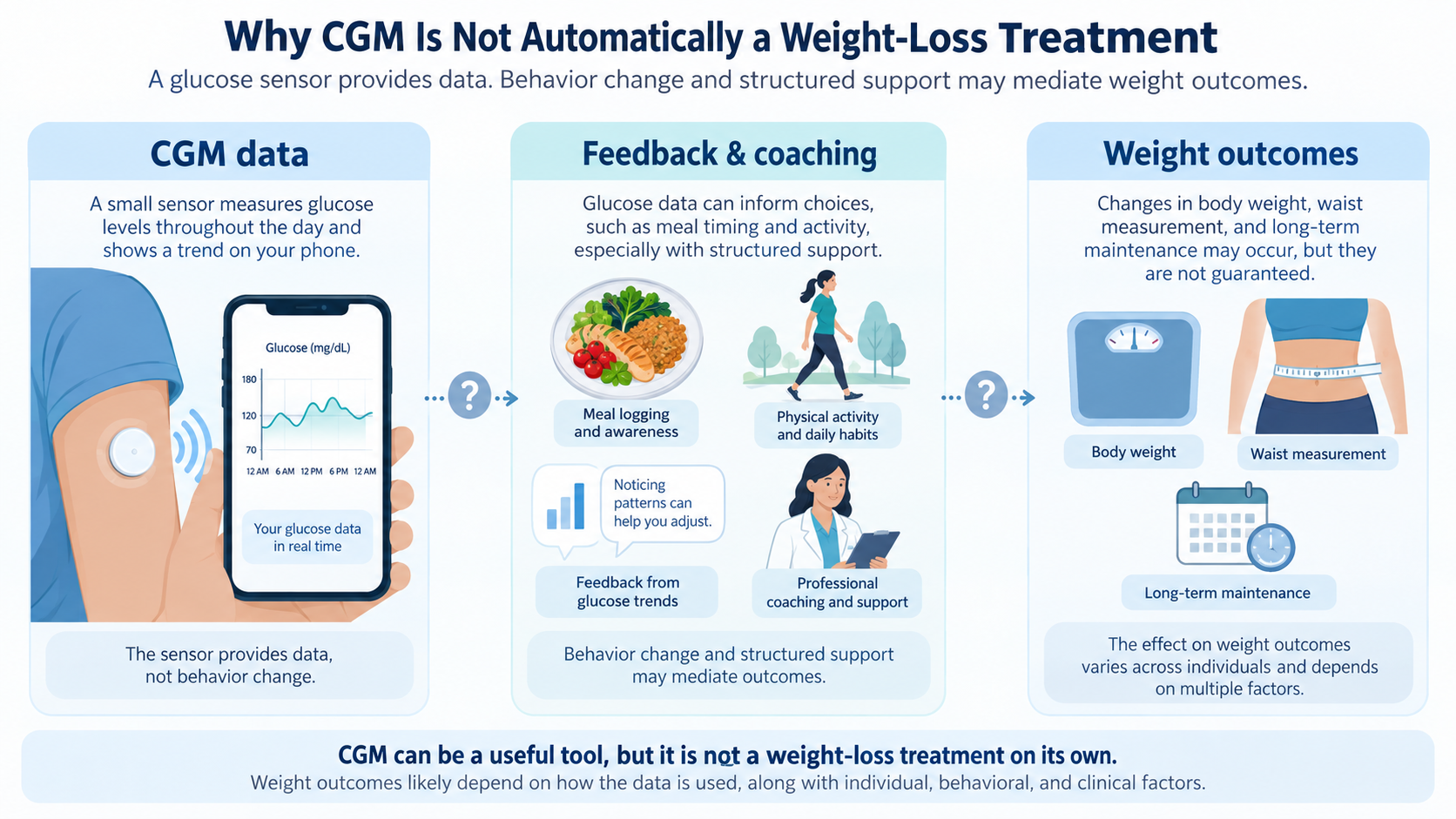
    Evidence pathway from CGM data through feedback and coaching to uncertain weight outcomes
    A CGM supplies data. Whether that data changes weight depends on behavior, support, individual factors, and time—not on the sensor alone.

    Why “23 studies” is not the same as 23 weight-loss trials

    A 2026 systematic review and meta-analysis by Liao and colleagues included 23 studies involving 1,074 people without diabetes across 11 countries. Seven were randomized controlled trials; the rest included observational, cross-sectional, cohort, and other clinical studies. The projects also had overlapping but different aims: glucose optimization, weight management, dietary behavior, adherence, measurement performance, or feasibility.

    The pooled BMI result came from only three studies. Its standardized mean difference was −0.25, with a 95% confidence interval from −0.63 to +0.12 (P=0.19). In plain language, the analysis did not establish a statistically clear BMI reduction. The number −0.25 is a standardized effect size, not “0.25 kilograms lost,” and the confidence interval includes both a possible benefit and no meaningful difference.

    The same review found a modest improvement in mean glucose overall, with more signal in participants with prediabetes than in normoglycemic participants. It also reported short-term behavior and adherence signals. That is useful—but improved glucose metrics, lower body weight, and long-term weight maintenance are three different outcomes. A favorable result for one should not be silently converted into proof of the others.

    Better question: Instead of asking “How many CGM studies exist?” ask “How many studies directly compared the weight outcome I care about, in people like me, for long enough to matter?”

    What randomized trials of CGM for weight loss actually tested

    The trials below are especially relevant to CGM and weight, but they did not test identical interventions or populations. Their weight changes should not be ranked as if every study were the same experiment.

    StudyParticipants and durationWhat was comparedWeight result and limitation
    Kitazawa et al., 2024168 adults at high risk for type 2 diabetes; 12 weeksSmartphone lifestyle coaching plus intermittently scanned CGM versus controlAmong 136 participants with weight-change data: −1.70 kg versus −0.77 kg. The app, coaching, and sensor effects cannot be separated.
    Basiri & Cheskin, 202430 adults with prediabetes and overweight or obesity; 30 daysBoth groups received personalized nutrition therapy; one group could see real-time CGM dataBoth groups lost weight; the visible-data group had larger reductions. Very small and short, with intensive nutrition support in both groups.
    Gradiser et al., 202635 women with BMI above 25; 12 weeksBoth groups received supervised exercise three times weekly and identical dietary counseling; CGM exposure differedMean change −5.5 kg versus −0.2 kg. Encouraging, but from a small, specific population and not yet a long-term test.
    OWL-CGM, 202649 adults who had already lost more than 5 kg; 24 weeksBoth groups received five individual dietitian sessions; one also received CGM and trainingAmong 41 completers: −2.7 kg versus +0.5 kg. A feasibility trial in successful weight losers, not a fully powered effectiveness trial.
    Nishikage et al., 202540 adults with overweight and impaired glucose tolerance or mild type 2 diabetes; 24 weeksDiet and exercise therapy with or without intermittently scanned CGM−1.8 kg versus −2.2 kg; no significant between-group difference. Included some participants with mild diabetes, so it is indirect evidence for people without diabetes.

    The central problem: sensor effect versus program effect

    Several positive trials studied a bundle: CGM plus an app, personalized nutrition, dietitian visits, exercise supervision, goal setting, or education about how to act on the readings. A bundle may be valuable in real life, but it does not answer how much of the result came from the sensor.

    Kitazawa’s trial illustrates the issue. Weight was a secondary outcome, and fewer people contributed weight data than entered the primary analysis population. The roughly 0.93 kg difference between the groups can be calculated from the reported changes, but it should not be relabeled as “weight lost because of CGM.” The intervention included app-based coaching.

    OWL-CGM offers a somewhat cleaner clue because both groups received individual dietitian counseling. The CGM group also received the sensor and training, and the result remained favorable in a sensitivity analysis accounting for missing data. Still, it was a small feasibility study. Its participants had already lost more than 5 kg, so their experience may not apply to someone starting weight management for the first time.

    The plausible mechanism is behavioral, not magical: data may make a meal, snack, walk, or sleep pattern feel more immediate. That feedback can help some people notice and repeat useful habits. But feedback can also be ignored, misread, or become overwhelming. The sensor supplies information; a person and their support system must decide what to do with it.

    Why one negative trial matters

    Evidence reviews become misleading when they collect only studies with exciting results. In Nishikage’s 24-week pilot trial, both groups received diet and exercise therapy. Adding intermittently scanned CGM did not produce greater weight loss: average changes were −1.8 kg with CGM and −2.2 kg in the control group.

    This is not definitive proof that CGM “does not work” for people without diabetes. The trial was small, baseline BMI differed between groups, and the population included impaired glucose tolerance as well as mild type 2 diabetes. It is more appropriately used as evidence that outcomes do not always move in the same direction.

    A better way to interpret your CGM graph

    If weight management is the goal, keep three scorecards separate:

    1. Glucose metrics: Did mean glucose, post-meal patterns, or time in a chosen range change?
    2. Weight-related outcomes: Did body weight, waist measurement, body composition, or another personally meaningful outcome change?
    3. Durability: Did useful behavior and weight changes remain after intensive coaching or sensor use ended?

    The trials reviewed here lasted from 30 days to 24 weeks. That is not enough to establish one-year maintenance or prevention of future disease. “Without diabetes” is also not one uniform population: a person with normal glucose, someone with prediabetes, an adult with obesity, and someone who recently lost substantial weight do not start from the same place.

    At present, the stronger hypothesis is not that a sensor burns fat. It is that real-time feedback may help some people change behavior, particularly when paired with a plan and support. We still need larger comparisons that hold counseling constant, identify who benefits most, follow participants after the sensor is removed, and measure whether the added benefit justifies the cost and burden.

    Who might reasonably try a CGM for weight loss?

    There is no validated checklist that can predict who will lose weight with CGM. The questions below translate the current evidence into a practical decision—not a medical screening tool.

    • Is the behavior question specific? “I want to be healthier” is difficult to test. “Can meal logging and a short walk after dinner help me build a repeatable routine?” is more actionable.
    • Will you pair data with a plan? A sensor is more likely to be useful when readings inform a defined nutrition, activity, sleep, or coaching program.
    • Have you compared lower-cost alternatives? The same budget might fund dietitian visits, a structured activity program, or other support. Current trials do not establish which option is most cost-effective.
    • Are you measuring the outcome that matters? A smoother glucose curve is not automatically weight loss. Track weight trends, waist or functional goals, behavior sustainability, cost, and mental burden.
    • Could the data worsen anxiety or food restriction? If readings drive fear, compulsive checking, or an increasingly narrow diet, stop treating every fluctuation as a problem and seek qualified guidance.

    For current U.S. OTC and prescription price examples, intended-use cautions, and insurance questions, see our guide to CGM cost without insurance. If you are mainly concerned about cardiometabolic risk, a CGM should not replace standard assessment; our guide to metabolic syndrome blood tests explains the laboratory and physical measurements clinicians commonly use.

    Safety and limits: what a consumer CGM cannot do

    • A CGM reading alone does not diagnose diabetes, prediabetes, reactive hypoglycemia, or insulin resistance.
    • Sensor glucose is measured in interstitial fluid and can lag behind blood glucose when levels change quickly.
    • Compression, insertion issues, hydration, exercise, and other factors can produce readings that do not match how you feel.
    • Do not start, stop, or change medication based on wellness CGM data without a qualified clinician.
    • If you already use CGM for diabetes treatment, the limited weight-loss evidence in this article is not a reason to discontinue it.

    Symptoms matter more than a wellness graph. Seek urgent medical care for severe confusion, fainting, seizure, breathing difficulty, or other acute symptoms. If repeated readings concern you, confirm what the device instructions recommend and discuss appropriate laboratory testing with a clinician rather than trying to diagnose yourself from the curve.

    Bottom line: promising feedback tool, not proven necessity

    Saying “CGM is all marketing” ignores encouraging recent trials. Saying “clinical trials prove everyone loses weight with CGM” erases differences in population, counseling, exercise, adherence, and study duration.

    The most accurate position is between those extremes. CGM may be a useful feedback tool within some structured weight-management programs. It is not an established stand-alone weight-loss treatment for every person without diabetes, and long-term effects after the sensor comes off remain uncertain.

    Which CGM comparison answers your question?

    The key distinction is not simply “CGM versus no CGM.” A trial may test a whole support package or the added value of visible glucose feedback within similar care. Neither design establishes what happens when someone buys a sensor and uses it without support.

    Read the comparator before interpreting the weight result
    QuestionRelevant evidenceBoundary
    Does a CGM-containing program help?Kitazawa: app-based lifestyle intervention plus isCGM, in adults at high diabetes risk.A package comparison; it cannot assign the benefit to the sensor alone.
    Does seeing the data add value?Basiri: visible versus blinded CGM, with personalized nutrition in both groups.Closer to a feedback comparison, but only 30 participants and 30 days—not unsupported sensor use.
    Does CGM add to maintenance counseling?OWL-CGM: counseling in both groups; sensor and training added in one.A promising feasibility result in previous weight losers; not a definitive long-term efficacy trial.

    A closer comparison is not no evidence. Trials that keep background care similar can estimate the incremental benefit of CGM feedback and its associated education. They still cannot establish a universal benefit, isolate every component, or show that buying a sensor replaces the program.

    The date and denominator behind the headline

    The Liao review searched through December 2025 and included ages 10–71, not exclusively adults. Its three-study BMI synthesis should not be presented as a pooled analysis of the later 2026 trials listed above. We discuss those trials separately; we have not recalculated the pooled effect.

    OWL-CGM randomized 49 people, but 41 completed follow-up. Its reported intention-to-treat sensitivity analysis also favored CGM, which reduces—but does not eliminate—concern about missing outcomes. Keep recruitment, completion, and analysis counts distinct. Original trial abstract and analysis description.

    What would make the conclusion stronger?

    Our editorial criteria are larger trials with similar background support, clear weight endpoints, follow-up after feedback ends, and separate results for normal glucose and prediabetes. Evidence that a glucose curve changed is not, by itself, evidence of sustained weight loss or disease prevention. These are proposed evidence needs, not a formal GRADE assessment.

    Related questions, not interchangeable answers: our Akkermansia maintenance review asks about a specific supplement after dieting; our fiber and SCFA review separates food interventions from metabolite supplements. Neither establishes that combining those approaches with CGM improves outcomes.

    Editorial clarification — October 11, 2026

    Added a near-summary explanation of feedback-with-matched-support versus package comparisons, using a selected recheck of Basiri’s public abstract. Existing study counts, effects, uncertainty, images, and overall conclusions are unchanged. This AI-assisted precision edit is not a new literature search or scientific review; Pierre Theurey’s credit remains limited to the September 16 version.

    Source check and revision record — October 6, 2026

    This targeted update checked the Liao publisher text and the PubMed records for Kitazawa, Basiri, and OWL-CGM. Full-text details and confidence intervals not verified in this update were not reconstructed from abstracts. The Gradiser and Nishikage entries remain from the earlier review; they were not fully re-extracted today. No exhaustive new search, independent duplicate extraction, or new meta-analysis was performed.

    Change: clarified package versus feedback comparisons, the review’s search cutoff and age range, and missing-outcome interpretation. The overall conclusion is unchanged. The September 16 scientific-review credit applies to that earlier version; no new article-specific review by Pierre Theurey is claimed for this October 6, AI-assisted source-check and editorial update.

    How this evidence review was conducted

    This is a question-focused evidence review, not a new systematic review, meta-analysis, clinical guideline, or independent replication of the included studies.

    • Question: In adults without diagnosed diabetes, do CGM-containing interventions improve weight loss or maintenance compared with another intervention? Weight outcomes were considered separately from glucose outcomes.
    • Search approach: Through September 16, 2026, we checked PubMed and journal records using concepts including continuous glucose monitoring, non-diabetic, prediabetes, weight loss, weight maintenance, randomized trial, and identified article titles. We did not run the same exhaustive strategy across every academic database.
    • Access: We checked the full systematic review and available full-text records for Kitazawa and Basiri. Public abstracts and indexed records were used for Gradiser, OWL-CGM, and Nishikage, with additional details checked where available. Abstract-only review cannot fully assess allocation concealment, missing-data handling, or selective reporting.
    • Limits: We did not perform dual independent screening, formal risk-of-bias scoring, GRADE certainty ratings, or a new pooled effect calculation. We did not add sample sizes across studies because participant overlap and differences in analysis populations were not fully audited. Relevant studies may have been missed.
    • Update trigger: We will revisit the conclusion if a sufficiently powered long-term comparison, post-sensor follow-up, major correction, or retraction changes the balance of evidence.

    Key references

    1. Liao X, et al. Continuous glucose monitoring in non-diabetic populations: a systematic review of observational and interventional studies with meta-analysis. European Journal of Medical Research. 2026.
    2. Kitazawa M, et al. Lifestyle Intervention With Smartphone App and isCGM for People at High Risk of Type 2 Diabetes: Randomized Trial. Journal of Clinical Endocrinology & Metabolism. 2024;109:1060–1070.
    3. Basiri R, Cheskin LJ. Personalized Nutrition Therapy without Weight Loss Counseling Produces Weight Loss in Individuals with Prediabetes Who Are Overweight/Obese. Nutrients. 2024;16:2218.
    4. Gradiser M, et al. Intermittently Scanned Continuous Glucose Monitoring Enhances Weight Loss and Adherence in Women with Obesity. Diabetes Technology & Therapeutics. 2026;28:907–915.
    5. Mohd Hatta NZ, et al. Optimizing Weight Loss Maintenance: Can Continuous Glucose Monitoring Play a Role (OWL-CGM)? Clinical Nutrition. 2026;64:106738.
    6. Nishikage S, et al. Effects of intermittently scanned continuous glucose monitoring on body weight and glycemic variability in individuals with overweight and impaired glucose tolerance or mild diabetes. Obesity Research & Clinical Practice. 2025;19:70–76.

    Review and conflict-of-interest disclosure

    Denny Jaeyong Choi and Pierre Theurey completed the editorial and scientific review of the September 16, 2026 version. The October 6 source-check and editorial additions are documented above; a new scientific review of those additions has not been confirmed. Both are co-founders of RockBio. According to the site operator, neither reviewer has a CGM product or app development business, equity holding, consulting fee, or sponsorship relationship relevant to this article. No affiliate purchase links are included. Editorial and scientific review are not the same as independent journal peer review. Reviewer backgrounds and our process are described on the About Metabolic Access page.

    Medical information notice: This article provides general education and research interpretation. It does not diagnose or treat diabetes, hypoglycemia, obesity, or any other condition and does not replace individualized care.
  • Metabolic Syndrome Blood Tests: What Insurance Covers in 2026

    Metabolic Syndrome Blood Tests: What Insurance Covers in 2026

    Quick answer: Metabolic syndrome blood tests are not a single special panel. It combines waist circumference and blood pressure with three laboratory measurements: fasting glucose, triglycerides, and HDL cholesterol. U.S. insurance may cover some of these as preventive screening when you meet plan criteria and use in-network care. The same tests may be subject to a deductible, copay, or coinsurance when they are ordered to evaluate symptoms or monitor a known condition. Confirm the reason for the order, the laboratory network, and your estimated cost before the blood draw.

    Published: September 13, 2026 · Last reviewed: September 13, 2026
    Written and edited by: Denny Jaeyong Choi (JD), INSEAD MBA

    Key takeaways

    • Metabolic syndrome is generally identified when at least three of five risk factors are present. Only three of those five require a blood sample.
    • A fasting glucose test is not the same as an A1C. Fasting glucose usually requires at least eight hours without food; an A1C usually does not.
    • “Preventive” does not automatically mean every related lab is free. Network status, age and risk criteria, the diagnosis attached to the order, and services performed during the same visit can affect cost-sharing.
    • Original Medicare Part B covers eligible diabetes screening up to twice per year and a cardiovascular lipid screening once every five years, with no charge when coverage rules are met and the provider accepts assignment.
    • The best cost-control step is to ask for the exact test names, the laboratory, and a pre-service estimate before your appointment.

    What are metabolic syndrome blood tests?

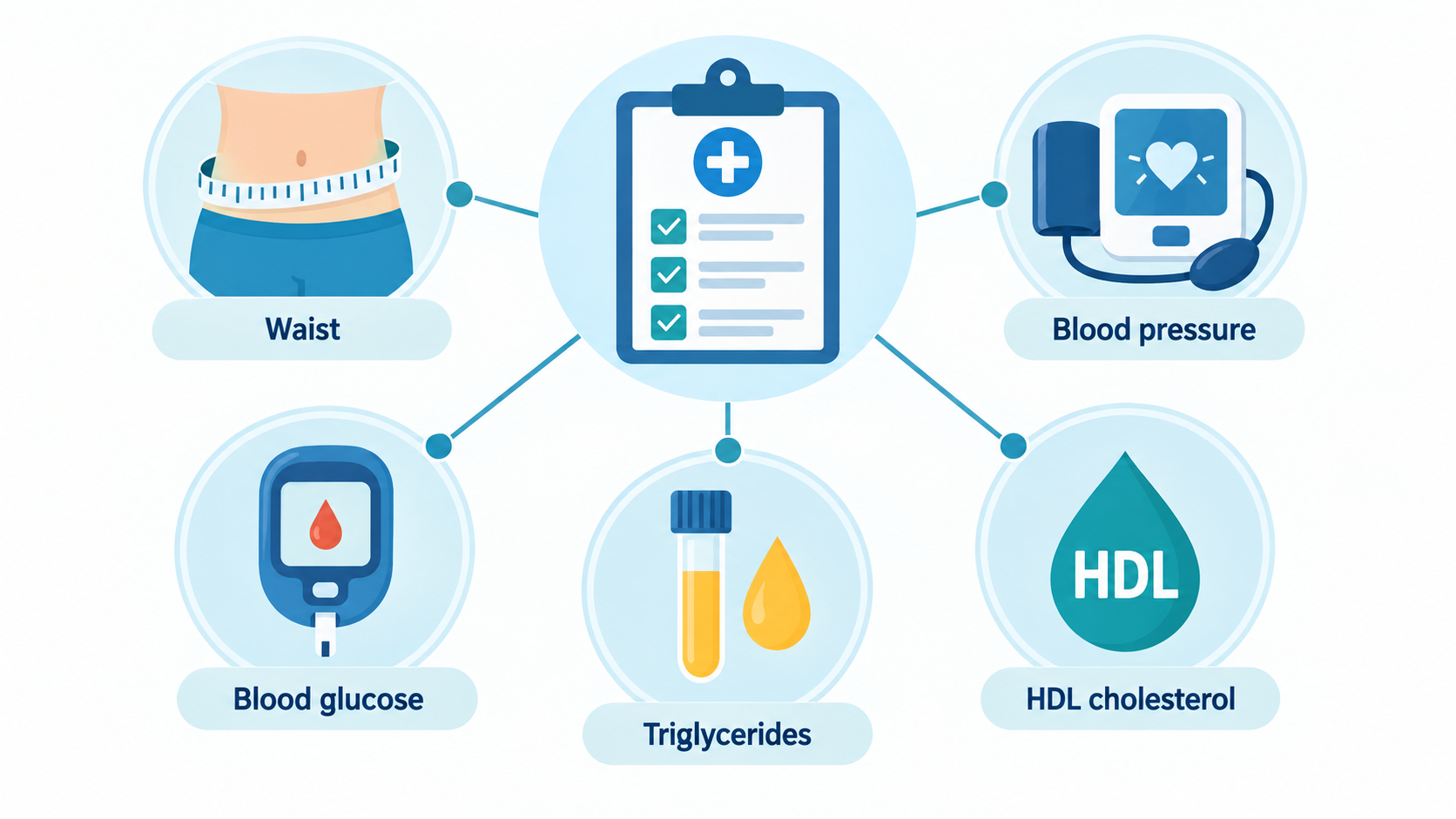
    Metabolic syndrome is a cluster of findings that together raise the risk of cardiovascular disease, type 2 diabetes, stroke, and other health problems. The National Heart, Lung, and Blood Institute (NHLBI) says a clinician may diagnose it when three or more of five conditions are present. Those conditions are a large waistline, elevated blood pressure, elevated fasting glucose, elevated triglycerides, and low HDL cholesterol. Our separate guide explains the five metabolic syndrome criteria in more detail.

    The phrase “metabolic syndrome blood panel” can therefore be misleading. There is no single universal panel with that name. A clinician usually combines a physical assessment with a glucose test and a lipid panel. The exact order may vary based on your history, medications, symptoms, prior results, and what your insurance plan covers.

    Five metabolic syndrome measurements: waist circumference, blood pressure, blood glucose, triglycerides, and HDL cholesterol
    Metabolic syndrome is assessed using five measurements; insurance coverage depends on why each test is ordered and how it is billed.

    The five measurements, in plain English

    MeasurementCommon threshold used for metabolic syndromeDoes it require fasting?Typical insurance question
    Waist circumferenceMore than 40 in (102 cm) for men or 35 in (88 cm) for women; ethnicity-specific cutoffs may differNoUsually part of an office assessment rather than a separate lab claim
    Blood pressure130/85 mm Hg or higher, or treatment for high blood pressureNoScreening may be preventive; evaluation or management can generate a visit charge
    Fasting glucose100 mg/dL or higher, or treatment for elevated glucoseYes, when specifically ordered as fasting plasma glucoseAsk whether the order is preventive diabetes screening or diagnostic testing
    Triglycerides150 mg/dL or higher, or treatment for elevated triglyceridesFollow the ordering clinician’s instructionsOften included in a lipid panel; preventive frequency limits may apply
    HDL cholesterolBelow 40 mg/dL for men or below 50 mg/dL for women, or treatmentFollow the ordering clinician’s instructionsUsually included in a lipid panel rather than billed alone
    Thresholds summarize commonly used adult criteria. Clinicians may apply population-specific waist cutoffs and interpret results in context.

    The NHLBI diagnostic guide describes these measurements and notes that waist cutoffs may vary by race and ethnicity. One result also does not diagnose diabetes by itself in an asymptomatic person. The National Institute of Diabetes and Digestive and Kidney Diseases (NIDDK) explains that abnormal diabetes testing is usually confirmed with a second measurement.

    Which metabolic syndrome blood tests should you ask about?

    1. Fasting plasma glucose

    This is the glucose measurement used in the classic metabolic syndrome criteria. NIDDK says it is usually performed in the morning after at least eight hours of fasting, with only sips of water. A result from a home glucose meter cannot diagnose diabetes.

    2. A lipid panel

    A standard lipid panel commonly reports triglycerides and HDL cholesterol, as well as total and LDL cholesterol. Triglycerides and HDL are the two components used for metabolic syndrome. LDL is important for cardiovascular risk management, but it is not one of the five metabolic syndrome criteria.

    3. A1C, when clinically appropriate

    An A1C estimates average blood glucose over roughly three months and usually does not require fasting. It can screen for prediabetes or diabetes, but it does not directly replace fasting glucose in every definition of metabolic syndrome. It can also be less reliable in some situations, including certain anemias, hemoglobin variants, recent blood loss, kidney failure, or pregnancy. Your clinician should decide whether fasting glucose, A1C, or another test best answers the clinical question.

    A continuous glucose monitor is not normally required to diagnose metabolic syndrome. If you are comparing self-pay options for glucose tracking, see our guide to CGM cost without insurance.

    Will insurance cover metabolic syndrome blood tests?

    Often, at least part of the evaluation is covered—but “covered” and “free” are not the same. HealthCare.gov says Marketplace plans and many other plans cover specified preventive services without copayment or coinsurance, generally when the service is delivered by an in-network provider. Its adult list includes blood pressure screening, cholesterol screening for eligible adults, type 2 diabetes screening for certain adults with overweight or obesity, and obesity screening and counseling. The page also warns that zero-dollar coverage is not guaranteed in every case.

    The U.S. Preventive Services Task Force currently recommends screening asymptomatic adults ages 35 to 70 who have overweight or obesity for prediabetes and type 2 diabetes. Yet your plan document, network rules, and the way the claim is coded still matter. A plan may treat a test differently if you already have diabetes, high cholesterol, hypertension, symptoms, an abnormal prior result, or a medication that needs monitoring.

    Preventive screening versus diagnostic testing

    This distinction causes many surprise bills:

    • Preventive screening looks for disease in someone without symptoms who meets guideline and plan criteria.
    • Diagnostic testing evaluates a symptom, abnormal result, suspected condition, or known disease.
    • Monitoring follows an already diagnosed condition or treatment.

    The same laboratory test can fall into any of these categories. The difference may affect deductible and coinsurance. The ordering clinician—not the patient—selects the diagnosis and reason for the order, and the insurer adjudicates the claim. You should not ask anyone to change accurate coding simply to avoid a charge. Instead, ask for an estimate based on the clinically correct order.

    What does Medicare cover for metabolic syndrome blood tests?

    Original Medicare handles the glucose and lipid portions under separate benefits:

    • Diabetes screening: Medicare Part B covers eligible glucose screenings when a clinician determines that you are at risk. Medicare lists high blood pressure, abnormal cholesterol or triglycerides, obesity, and a history of high blood sugar among qualifying risk factors. Covered tests may include fasting or nonfasting glucose, A1C, or another Medicare-approved glucose test. Medicare.gov states that eligible beneficiaries can receive up to two screenings per year and pay nothing when the provider accepts assignment.
    • Cardiovascular screening: Part B covers blood tests for cholesterol, lipid, and triglyceride levels once every five years. Medicare.gov says you pay nothing when the provider accepts assignment.
    • Annual Wellness Visit: the visit includes blood pressure, weight, BMI or waist measurement when appropriate, and a personalized prevention plan. However, the visit itself does not automatically bundle every laboratory test. Labs must qualify under their own coverage rules, as the CMS guidance makes clear.

    Medicare Advantage plans must cover Medicare-covered services but can use plan networks and administrative rules. Call the number on your plan card for the lab network and expected cost. If an abnormal glucose result identifies prediabetes, some beneficiaries may also qualify for the Medicare Diabetes Prevention Program.

    A five-minute call that can prevent a surprise bill

    Call your insurer before the blood draw. Use the exact test names on the order and ask:

    1. Is the ordering clinician in network?
    2. Is the laboratory in network? Hospital-owned labs and independent labs may have different rates.
    3. Are fasting plasma glucose, A1C, and the lipid panel covered as preventive screening for me?
    4. Do age, risk-factor, or frequency rules apply?
    5. Will I owe a deductible, copay, or coinsurance if the order is diagnostic or for monitoring?
    6. Do I need a referral or prior authorization?
    7. Can you give me a call reference number or written estimate?

    You can also ask the clinic: “Which tests are being ordered, which lab will process them, and can you send me the order so I can request a plan estimate?” If you are paying cash, request the self-pay price in writing and compare it with your expected in-network cost. A low cash price may not count toward your deductible.

    How to prepare for metabolic syndrome blood tests

    • Confirm whether fasting is required. If fasting plasma glucose is ordered, NIDDK advises at least eight hours without food; follow the lab’s exact instructions.
    • Ask about medications. Do not stop prescribed medicine on your own. Ask whether to take morning medicines and supplements before testing.
    • Bring prior results. Trends can be more informative than one isolated value.
    • Wear practical clothing. A correct waist measurement is taken around the abdomen, not over a bulky jacket.
    • Rest before blood pressure measurement. Tell the clinician about caffeine, exercise, smoking, pain, or stress that may affect the reading.

    A complete assessment should not reduce you to a single number. Our complete obesity evaluation guide explains how history, body measurements, complications, sleep, medications, barriers, and personal goals fit together.

    What if metabolic syndrome blood tests are abnormal?

    One abnormal value is a reason for a clinical conversation, not a self-diagnosis. Your clinician may repeat a measurement, confirm that the test was performed correctly, assess medications and other causes, or order additional tests. Metabolic syndrome is a risk framework; each component also deserves individual management.

    If three or more criteria are present, the next step is usually to address overall cardiovascular and diabetes risk rather than chase a label. That can include nutrition, physical activity, sleep, tobacco cessation, weight management, and treatment of blood pressure, glucose, or lipids when appropriate. If cost or coverage blocks care, tell the clinic. A feasible plan may use an in-network lab, covered preventive services, staged testing, or a different follow-up schedule.

    Frequently asked questions

    Is there one blood test for metabolic syndrome?

    No. Assessment combines waist circumference, blood pressure, fasting glucose, triglycerides, and HDL cholesterol. The last three involve laboratory testing.

    Do I need to fast?

    You need to fast for a fasting plasma glucose test. An A1C does not usually require fasting. Lipid-testing instructions can vary, so follow the order and laboratory directions rather than guessing.

    Will an annual physical include these labs for free?

    Not necessarily. Your plan may cover specific preventive screenings, but the office visit and each laboratory service have separate coverage rules. Original Medicare’s Annual Wellness Visit is not the same as a routine physical and does not automatically include clinical laboratory tests.

    Can I use home readings?

    Home blood pressure logs can provide useful context, but diagnosis should be confirmed with a clinician using a validated device and proper technique. A consumer glucose meter or CGM cannot by itself diagnose diabetes or metabolic syndrome.

    Bottom line

    Metabolic syndrome blood tests are only part of the workup: clinicians also measure waist and blood pressure, then check fasting glucose, triglycerides, and HDL. The billing can be less simple. Ask whether each service is preventive or diagnostic, verify both clinician and lab networks, and request an estimate. That preparation is often more useful than searching for a generic “metabolic panel,” which may not contain the tests needed to evaluate metabolic syndrome.

    Sources and further reading

    Medical and insurance information notice: This article provides general educational information and does not replace individualized medical advice, diagnosis, treatment, or a coverage determination from your insurer. Benefits, networks, billing rules, and clinical recommendations can change. Confirm current details with your clinician, laboratory, and health plan.

  • What Does a Complete Obesity Evaluation Include? 2026 ADA Guide

    A complete obesity evaluation looks beyond a single BMI number.
    Written by Denny Jaeyong Choi (JD), INSEAD MBA
    Published September 10, 2026 · Last updated September 10, 2026

    Quick answer

    The 2026 American Diabetes Association (ADA) standards describe obesity as a heterogeneous chronic disease that deserves a comprehensive, person-centered evaluation. That evaluation can include weight history, body-fat distribution, weight-related complications, current and past treatments, mental and physical health, treatment barriers, social factors, and support systems—not BMI alone. ADA Standards of Care in Overweight and Obesity—2026.

    For readers, the practical question is not “What is my number?” but “What information should a clinician and I use to choose the next step?” This guide explains the new framework, what BMI and waist measures can—and cannot—tell you, and how to prepare for a useful appointment.

    What changed in the ADA’s 2026 obesity framework?

    The ADA’s Obesity Association published dedicated 2026 standards for screening, diagnosis, evaluation, and staging in adults. The document emphasizes that excess adiposity can present differently across people and that evaluation should inform an individualized management plan. It also recommends checking for barriers to treatment and relevant complications rather than treating weight as an isolated measurement. Read the full ADA guideline.

    This matters because two adults can have the same BMI but different body composition, waist distribution, blood pressure, sleep symptoms, medications, medical history, and goals. The same number can therefore lead to different clinical conversations. A careful evaluation adds context before treatment decisions are made.

    What a complete evaluation adds beyond a scale reading
    Domain Questions to discuss Why it matters
    Body measurements How has weight changed? What are BMI, waist circumference, and waist-to-height ratio? Pattern and fat distribution add context to BMI.
    Health impact Are blood pressure, glucose, lipids, sleep, mobility, or other systems affected? Risk and treatment priorities differ by complications.
    Treatment history What has been tried, for how long, and with what result or adverse effect? Past response and tolerability inform the next option.
    Barriers and support Are cost, access, work schedule, food access, stress, or mental health affecting care? A plan must be feasible to be sustainable.
    Goals What outcome matters most: function, glucose, sleep, blood pressure, or weight? Person-centered goals make progress measurable.

    BMI is useful—but it is not the whole assessment

    BMI is calculated from weight and height and remains a practical screening measure. The 2026 ADA standards recommend screening adults for excess adiposity with BMI at least annually. But BMI does not directly measure body composition or where fat is carried. It can overestimate adiposity in a muscular person and underestimate it in some populations, including older adults and some people of Asian background. ADA 2026 standards, screening and diagnosis section.

    The guideline therefore supplements BMI with measures of central adiposity in specified ranges. These are clinical criteria for healthcare professionals, not a self-diagnosis shortcut. A measurement technique, medical history, and the person’s broader health picture all affect interpretation.

    Why waist circumference and waist-to-height ratio can add context

    Fat distribution is relevant because abdominal adiposity can carry different metabolic implications from total body weight alone. The ADA guideline includes waist circumference and waist-to-height ratio in its adult diagnostic framework. A waist measurement should be taken consistently and interpreted with the correct population-specific thresholds and clinical context.

    For adults of non-Asian background, the 2026 ADA table lists elevated waist circumference as at least 35 inches for women and at least 40 inches for men. For adults of Asian background, it lists at least 31.5 inches for women and at least 35.5 inches for men. These thresholds appear within the guideline’s diagnostic framework; they are not a universal rule that determines an individual’s diagnosis without evaluation. ADA 2026 table 3.1.

    The guideline also uses waist-to-height ratio of 0.5 or higher as an additional criterion in certain BMI ranges. Do not compare a measurement taken at home with a clinic measurement as if they were automatically identical. Ask the clinician how and where the measurement was taken.

    How obesity staging differs from simply labeling weight

    Screening asks whether excess adiposity may be present. Evaluation asks what factors and health effects are relevant. Staging then helps organize risk and guide management. The ADA recommends that clinicians consider regional fat distribution and the Edmonton Obesity Staging System when risk-stratifying adults diagnosed with overweight or obesity.

    Staging is not a judgment of effort or character. It is a way to ask whether there are symptoms, functional effects, complications, or treatment needs that should change the plan. For example, a clinician may prioritize glucose evaluation, blood-pressure management, sleep-apnea assessment, mobility support, or medication review depending on the person’s presentation.

    Our separate metabolic syndrome criteria guide explains five cardiometabolic risk factors. It can provide background, but it does not replace a full obesity evaluation or diagnose anyone from a blog checklist.

    Obesity evaluation: what happens during the first appointment?

    The ADA standards recommend a comprehensive initial evaluation after overweight or obesity is diagnosed. Expect the conversation to cover more than current weight.

    1. Weight history. Bring your approximate highest and lowest adult weights, major changes, timing of weight gain, previous stable periods, pregnancy history when relevant, and what was happening around a change. A timeline is more useful than a single “before” number.
    2. Contributing factors. Discuss sleep, shift work, appetite patterns, activity, pain, stress, mood, medical conditions, and medicines that may affect weight or energy. This is not a search for blame; it is a search for modifiable barriers and appropriate care.
    3. Health status and complications. Depending on your history, the clinician may review blood pressure, glucose-related risk, lipid abnormalities, liver health, cardiovascular risk, sleep symptoms, mobility, and mental health. The appropriate tests are individualized.
    4. Past treatments. List nutrition programs, activity plans, behavioral support, medications, supplements, procedures, and the duration of each. Include what helped, what did not, and any side effects or reasons you stopped.
    5. Goals and support. Decide what you want care to improve. Weight can be one outcome, but function, glucose, sleep, pain, blood pressure, and quality of life may be equally or more important. Ask who will support follow-up and how progress will be measured.

    How to prepare for a more useful obesity evaluation

    You do not need a perfect food diary or a dramatic weight-loss attempt before making an appointment. A short, honest record is enough to start.

    • Write down your usual sleep and wake times, including night-shift patterns.
    • List all prescription medicines, over-the-counter products, supplements, and recent changes.
    • Record home blood-pressure or glucose readings only if you already monitor them; do not start testing solely to create a “better” appointment.
    • Note snoring, witnessed breathing pauses, gasping, or daytime sleepiness. Our sleep-apnea testing and cost guide explains how clinical testing is chosen and billed.
    • Bring your insurance card and ask whether referrals, prior authorization, or a specific clinic are required for the next step.
    • Write down two goals and three questions. For example: “I want better stamina,” “I want to understand my glucose risk,” or “I need a plan that works with my night shifts.”

    What questions should you ask the clinician?

    Use questions that turn measurements into decisions:

    1. “What does my weight history and distribution suggest about my current health risks?”
    2. “Which complications or related conditions should we evaluate first?”
    3. “Would waist circumference or waist-to-height ratio add useful information in my case?”
    4. “What is the goal of each test, and how would the result change the plan?”
    5. “Which treatment options fit my health history, preferences, budget, and schedule?”
    6. “What follow-up interval and progress measures should we use?”
    7. “What would make us adjust the plan, and who should I contact if a problem occurs?”

    If medication is discussed, ask about the exact product, expected benefit, side effects, contraindications, monitoring, cost, and what happens if coverage is denied. Our weight-loss medication insurance guide explains why coverage depends on the exact drug, indication, formulary, and prior-authorization rules.

    Why treatment barriers belong in the medical record

    A plan can fail because it is medically inappropriate, but it can also fail because it is unaffordable, inaccessible, incompatible with work, or impossible to follow with available food and support. The ADA standards explicitly include treatment barriers and social determinants of health in the evaluation framework.

    Tell the clinician if a proposed plan conflicts with shift work, caregiving, transportation, food access, cultural preferences, physical limitations, or mental-health needs. This information does not make your care less “medical.” It helps the team distinguish a treatment that did not work from a treatment that could not be implemented.

    What this guideline does not mean

    • It does not mean BMI is useless. BMI remains a screening tool; it is simply not a complete measure of health or body composition.
    • It does not mean everyone needs every test. Testing should answer a clinical question and be interpreted in context.
    • It does not prescribe one weight-loss method. The appropriate plan depends on health status, goals, previous treatment, preferences, access, and risk.
    • It does not turn waist measurements into a diagnosis. Thresholds support clinical assessment; they do not replace it.
    • It does not promise a particular outcome. Obesity care is ongoing, and follow-up is part of the treatment process.

    Frequently asked questions

    Is BMI enough to diagnose obesity?

    No. BMI is a practical screening measure, but the ADA’s 2026 framework supplements it with body-distribution measures in specified situations and recommends a comprehensive evaluation. Individual interpretation belongs with a qualified clinician.

    Should I measure my waist at home?

    You can record a home measurement to discuss, but do not use it to diagnose yourself. Ask the clinician to explain the measurement method, threshold, and how it fits with your body composition, ethnicity, health history, and other findings.

    Does a higher BMI always mean worse metabolic health?

    No. Risk is influenced by fat distribution, duration, complications, age, medical conditions, and other factors. The same BMI can correspond to different clinical situations.

    Will an obesity evaluation automatically lead to medication?

    No. Evaluation is used to understand needs and options. Treatment may include behavioral, nutritional, physical-activity, medical, procedural, or combined approaches, depending on the clinical situation and the person’s goals.

    How often should weight or metabolic health be reviewed?

    The ADA recommends annual screening for excess adiposity in adults, while follow-up for an established condition depends on the treatment plan and health needs. Ask your clinician what interval is appropriate for you.

    Bottom line

    The most useful lesson from the ADA’s 2026 obesity standards is that assessment should be multidimensional. A scale and BMI can start the conversation, but weight history, waist distribution, complications, treatment experience, barriers, support, and personal goals help determine what should happen next.

    If you are preparing for an appointment, bring a short timeline, a medication list, a few symptoms, and questions about goals and costs. Better information creates a more realistic plan—and a more respectful conversation about metabolic health.

    Sources and editorial notes

    Written and edited by: Denny Jaeyong Choi (JD), INSEAD MBA

    This article was prepared with AI-assisted research and drafting. It provides general educational information for US readers and does not diagnose, treat, or replace individualized medical advice. No independent scientific review is claimed for this article. Discuss measurements, tests, and treatment decisions with a qualified healthcare professional. Insurance and clinical guidelines can change; verify current details with your clinician and plan.

  • Sleep Duration and Blood Sugar: What 2026 Evidence Says About Weight

    Sleep duration and blood sugar are the focus of this evidence review.
    Written by Denny Jaeyong Choi (JD), INSEAD MBA
    Published September 9, 2026 · Last updated September 9, 2026

    Quick answer

    Sleep and blood sugar are connected through appetite, glucose regulation, and daily routines, but better sleep is not a guaranteed weight-loss treatment. A 2026 systematic review of 18 studies involving 7,715 adults with overweight or obesity found that the relationship between sleep and glucose metabolism was meaningful but not uniform: some studies linked sleep restriction with poorer insulin sensitivity, while others did not. Sleep quality was also associated with cardiometabolic outcomes, but fasting-glucose findings were less consistent. Accorley et al., 2026 systematic review.

    The practical takeaway is modest and useful: treat adequate, regular sleep as one part of metabolic-health care. Do not use a sleep target to diagnose insulin resistance, replace prescribed treatment, or blame yourself for a complex chronic condition.

    What the new 2026 review found about sleep and blood sugar

    The review searched five databases through January 2026 and included 18 studies: seven crossover trials, eight cross-sectional studies, two controlled trials, and one cohort study. Twelve studies used objective sleep measures and six used subjective assessments. The authors rated the overall methodological quality as moderate to high, but the studies differed in design, sleep measurement, and outcomes. Read the abstract and study details on PubMed.

    That design mix matters. A cross-sectional study can show that two things occur together; it cannot prove that short sleep caused a person’s glucose result. Even an intervention trial may answer a narrow question in a specific population. The review supports sleep as a relevant metabolic-health factor, not a single explanation for weight change or blood sugar.

    How to interpret sleep-and-metabolism evidence
    Finding What it supports What it does not prove
    Short sleep is common Sleep duration is a practical health factor worth assessing. That every short sleeper has abnormal glucose.
    Some studies show impaired insulin sensitivity Insufficient sleep can be a plausible contributor in some settings. That sleep alone caused an individual’s insulin resistance.
    Sleep extension trials show changes in intake Improving sleep may influence eating behavior for some people. That adding hours guarantees lasting weight loss.
    Sleep quality and glucose findings vary Duration is not the only dimension; quality and regularity matter too. That one wearable score can diagnose a metabolic disorder.

    How sleep duration may affect blood sugar and appetite

    Sleep changes more than how alert you feel. During sleep, the body coordinates brain activity, hormones, appetite signals, and glucose regulation. When people stay awake longer, there may be more opportunities to eat, especially late in the day. Stress, shift work, caregiving, pain, medications, and sleep disorders can all affect the relationship.

    In a randomized clinical trial of 80 adults with overweight who habitually slept less than 6.5 hours, a two-week sleep-extension intervention increased sleep by about 1.2 hours per night and reduced objectively estimated energy intake by about 270 calories per day compared with control. The study was short, involved a specific group, and was not a test of every sleep or weight-loss situation. Tasali et al., JAMA Internal Medicine randomized clinical trial.

    That is a useful signal, not a prescription. The result does not mean that 270 calories will disappear for everyone who goes to bed earlier. It does suggest why sleep can be a realistic support target: changing bedtime may influence the environment in which food choices occur, without requiring a new supplement or an extreme diet.

    How much sleep should adults aim for?

    The American Academy of Sleep Medicine and Sleep Research Society recommend that adults sleep 7 or more hours per night on a regular basis to promote optimal health. The recommendation is a population-level health target, not a requirement that every person needs exactly the same number of hours. AASM/SRS adult sleep-duration consensus statement.

    US data show why this is relevant: the CDC’s National Health Interview Survey report found that 30.5% of adults slept less than 7 hours on average in 2024. CDC NCHS Data Brief No. 559. Still, “7 or more” does not mean that a single night below seven hours causes disease, or that sleeping longer will automatically normalize blood sugar. Look for patterns over time and consider sleep quality, schedule regularity, and symptoms.

    Sleep duration is not the same as sleep quality

    Someone can spend eight hours in bed and still have fragmented sleep. Loud snoring, witnessed breathing pauses, gasping, morning headaches, dry mouth, or persistent daytime sleepiness can be reasons to discuss possible sleep apnea with a healthcare professional. NHLBI lists these as symptoms that may warrant clinical discussion; symptoms alone are not a diagnosis. NHLBI: sleep apnea symptoms.

    If a clinician recommends testing, our home sleep apnea test cost and insurance guide explains how home testing differs from in-lab polysomnography and which billing questions to ask. A consumer sleep score or snoring app should not be treated as a medical diagnosis. Persistent symptoms deserve a clinical pathway, especially if daytime sleepiness makes driving unsafe.

    A practical 14-day sleep and blood sugar plan

    This is a behavior-tracking exercise, not a treatment plan. Choose changes that fit your health, work, family, and safety needs. If you have insomnia, shift-work constraints, suspected sleep apnea, bipolar disorder, or another medical issue, discuss an appropriate plan with a clinician.

    1. Measure your starting point. For three days, record bedtime, approximate sleep time, wake time, awakenings, daytime alertness, and late-night eating. Avoid trying to “fix” everything before you know your baseline.
    2. Set a consistent wake time. A stable morning anchor is often easier to maintain than forcing an early bedtime when you are not sleepy. Keep the target realistic.
    3. Create a sleep opportunity. Move bedtime earlier in small increments if you routinely have less than seven hours available. Do not sacrifice needed sleep for exercise or meal preparation.
    4. Protect the last hour. Reduce work, bright light, and stimulating content before bed. A short wind-down routine can make the transition more repeatable.
    5. Use daylight and activity strategically. Get natural light earlier in the day and schedule physical activity at a time that does not interfere with sleep. CDC also recommends a regular sleep schedule and earlier-day natural light in its heart-health guidance. CDC: sleep and heart health.
    6. Track behavior, not just a wearable score. Note appetite, evening snacking, energy, and schedule changes. Wearables can help you notice patterns, but their sleep-stage and glucose interpretations are not a substitute for clinical testing.
    7. Review the result without self-blame. Ask whether you had more sleep opportunity, fewer late-night eating occasions, or better daytime function. If nothing improved, consider another explanation rather than forcing the same strategy.

    Sleep duration and blood sugar: what to measure

    For a personal sleep and blood sugar experiment, the most useful measures are often ordinary ones: average sleep opportunity, wake-time consistency, daytime sleepiness, appetite timing, and whether you can follow the routine. A home glucose meter or continuous glucose monitor may be appropriate for some people for specific clinical reasons, but a single reading or a short-term trend does not diagnose diabetes or insulin resistance on its own.

    Likewise, a lower scale number after a few days may reflect fluid and digestive changes, not a lasting change in body fat. The same caution applies to a higher number. If you are concerned about blood sugar, ask a clinician which tests and follow-up schedule make sense for your situation. For context, our metabolic syndrome criteria guide covers a separate cluster of risk factors and should not be used as a self-diagnosis tool.

    When sleep advice is not enough

    Seek professional help when sleep problems are persistent, severe, or affecting safety. Discuss ongoing insomnia, loud snoring with breathing pauses, extreme daytime sleepiness, major schedule disruption, or suspected medication effects with a healthcare professional. Do not drive when you are too sleepy to do so safely; NHLBI specifically advises paying attention to sleepiness and avoiding driving when tired or sleepy. NHLBI: living with sleep apnea.

    Sleep improvement also should not delay care for symptoms such as excessive thirst or urination, unexplained weight change, fainting, confusion, or other urgent concerns. A health blog cannot determine whether a symptom is caused by sleep, diabetes, medication, stress, or another condition.

    Bottom line

    The 2026 evidence points to sleep as a meaningful part of metabolic health, with an important qualifier: the findings are heterogeneous. Better sleep may help some people regulate appetite and glucose metabolism, but it is not a magic lever and does not replace nutrition, activity, medical treatment, or evaluation for sleep disorders.

    A sensible starting point is to build a regular opportunity for at least seven hours, observe your sleep and eating patterns for two weeks, and take persistent symptoms to a qualified professional. The goal is not perfect sleep. It is a clearer picture of which mechanisms and barriers matter for you.

    Frequently asked questions

    Can sleeping more improve blood sugar?

    It may help some people, especially when short or disrupted sleep is contributing to eating patterns or impaired glucose regulation. The 2026 review found mixed results, so sleep duration alone cannot predict an individual glucose response. Do not change diabetes medication based on sleep or wearable data.

    Is seven hours a strict rule?

    No. AASM’s recommendation is seven or more hours regularly for adults as a general health target. Individual needs and medical circumstances vary. Regularly sleeping too little or too much, or feeling unrefreshed despite enough time in bed, is worth discussing with a healthcare professional.

    Will better sleep cause weight loss without changing my diet?

    Not necessarily. One short randomized trial found lower energy intake after sleep extension in adults with overweight, but that result does not guarantee lasting weight loss for everyone. Think of sleep as a supportive condition for health behavior, not a stand-alone weight-loss product.

    Should I buy a sleep tracker?

    You do not need one to begin. A simple sleep diary can show bedtime, wake time, awakenings, and daytime symptoms. If you use a tracker, treat it as a trend tool rather than a diagnostic device, and bring persistent concerns to a clinician.

    Sources and editorial notes

    Written and edited by: Denny Jaeyong Choi (JD), INSEAD MBA

    This article was prepared with AI-assisted research and drafting. It provides general educational information for US readers and does not diagnose, treat, or replace individualized medical advice. No independent scientific review is claimed for this article. Discuss persistent sleep, glucose, or weight concerns with a qualified healthcare professional.

  • Is alli Safe? What the FDA’s 2026 Kidney Warning Means

    Is alli Safe? What the FDA’s 2026 Kidney Warning Means

    Quick answer: The alli kidney warning is a 2026 FDA label update. In June 2026, the FDA approved updated labeling for alli (orlistat 60 mg), the only FDA-approved over-the-counter weight-loss aid in the United States, to warn about rare reports of kidney injury and kidney stones. This does not mean every person who takes alli will develop a kidney problem. It does mean that people with a history of kidney disease or kidney stones should ask a health professional before using it, and anyone who develops severe back or groin pain, painful urination, blood in the urine, swelling, or noticeably less urine should stop and seek medical advice.

    Published September 7, 2026 · Last updated September 7, 2026

    The FDA update matters because alli is sold without a prescription. People may start it after reading a package label or speaking with a pharmacist rather than having a full medication review. This is not a recall and does not say that alli is ineffective. It is a safety update that gives consumers more information before deciding whether the potential benefit is worth the possible risk.

    Alli kidney warning: what changed in 2026?

    On June 10, 2026, the FDA announced changes to the Drug Facts label for alli (orlistat) 60 mg. The revised labeling warns about rare reports of acute kidney injury, hyperoxaluria, calcium oxalate kidney stones, and oxalate nephropathy. The risk information is now aligned across approved orlistat products, including the prescription-strength product Xenical.

    The FDA reviewed reports from its adverse-event monitoring system and the medical literature from alli’s approval in 2007 through the end of 2023. It identified 12 cases involving kidney complications after alli use: nine from the monitoring system and three from published literature. Eight people were hospitalized and five required dialysis. These reports cannot prove that alli caused every event, and some people also had possible risk factors such as obesity, diabetes, high blood pressure, or previous kidney disease. Still, the pattern was strong enough to justify a label change.

    Because adverse-event reports are incomplete and voluntary, the 12 cases are not the rate of kidney injury among all alli users. They are a safety signal that helps regulators and clinicians identify a rare but potentially serious problem. The FDA also says the risk may not be limited to the higher prescription dose.

    How does alli work?

    Alli contains orlistat 60 mg. Orlistat is a lipase inhibitor: it blocks some enzymes that break dietary fat into smaller molecules the intestine can absorb. As a result, part of the fat in a meal passes through the digestive tract rather than being absorbed. Alli is approved for weight loss in adults with overweight when used with a reduced-calorie, low-fat diet; it is not intended for people who are not overweight.

    Taking more fat in a meal does not make alli work better. It generally makes gastrointestinal side effects more likely. The official product labeling tells users to follow a reduced-calorie, low-fat eating pattern and not exceed the labeled dose. Read the current package insert rather than relying on an old blog post or social-media video.

    Orlistat can also reduce absorption of some fat-soluble vitamins and beta-carotene. The consumer label includes instructions about a daily multivitamin taken at a separate time. Ask a pharmacist how to schedule it with your other medicines and supplements.

    How could orlistat be connected to kidney stones or kidney injury?

    The concern described by the FDA involves oxalate. Oxalate is present in some foods and can also be produced by the body. Under some circumstances, more oxalate may be absorbed from the intestine and filtered by the kidneys. When oxalate combines with calcium in the urinary tract, it can contribute to calcium oxalate kidney stones. Oxalate crystals can also accumulate within the kidney and interfere with kidney function, a condition called oxalate nephropathy.

    This is a biologically plausible explanation, not a claim that every user will experience it. Individual risk may be influenced by kidney function, prior stones, hydration, diet, other medicines, and underlying illness. The FDA’s review did not establish a simple dose-response relationship. That is why the updated warning matters even for the nonprescription 60 mg product.

    Who should talk with a health professional before using alli?

    The FDA specifically advises people who have ever had kidney disease or kidney stones to ask a health care provider before taking alli. A pharmacist can be a useful first point of contact for an over-the-counter medicine, especially when the question is about interactions or whether a history listed on the label changes your risk.

    • Reduced kidney function, recurrent stones, hyperoxaluria, or oxalate-related kidney disease.
    • An organ transplant or medicines that suppress the immune system.
    • A condition that affects absorption of food or fat.
    • Cyclosporine, levothyroxine, seizure medicine, warfarin, diabetes medicine, or several supplements.
    • Pregnancy, breastfeeding, or considering alli for someone under 18.
    • Symptoms that might already represent a kidney, gallbladder, liver, or gastrointestinal problem.

    MedlinePlus advises patients to tell their clinician about kidney stones, diabetes, gallbladder disease, pancreatitis, thyroid disease, eating disorders, and other medical conditions before taking orlistat. It also lists important timing and interaction considerations for cyclosporine and levothyroxine. Review the current label and your medication list with a pharmacist.

    Which symptoms matter after the alli kidney warning?

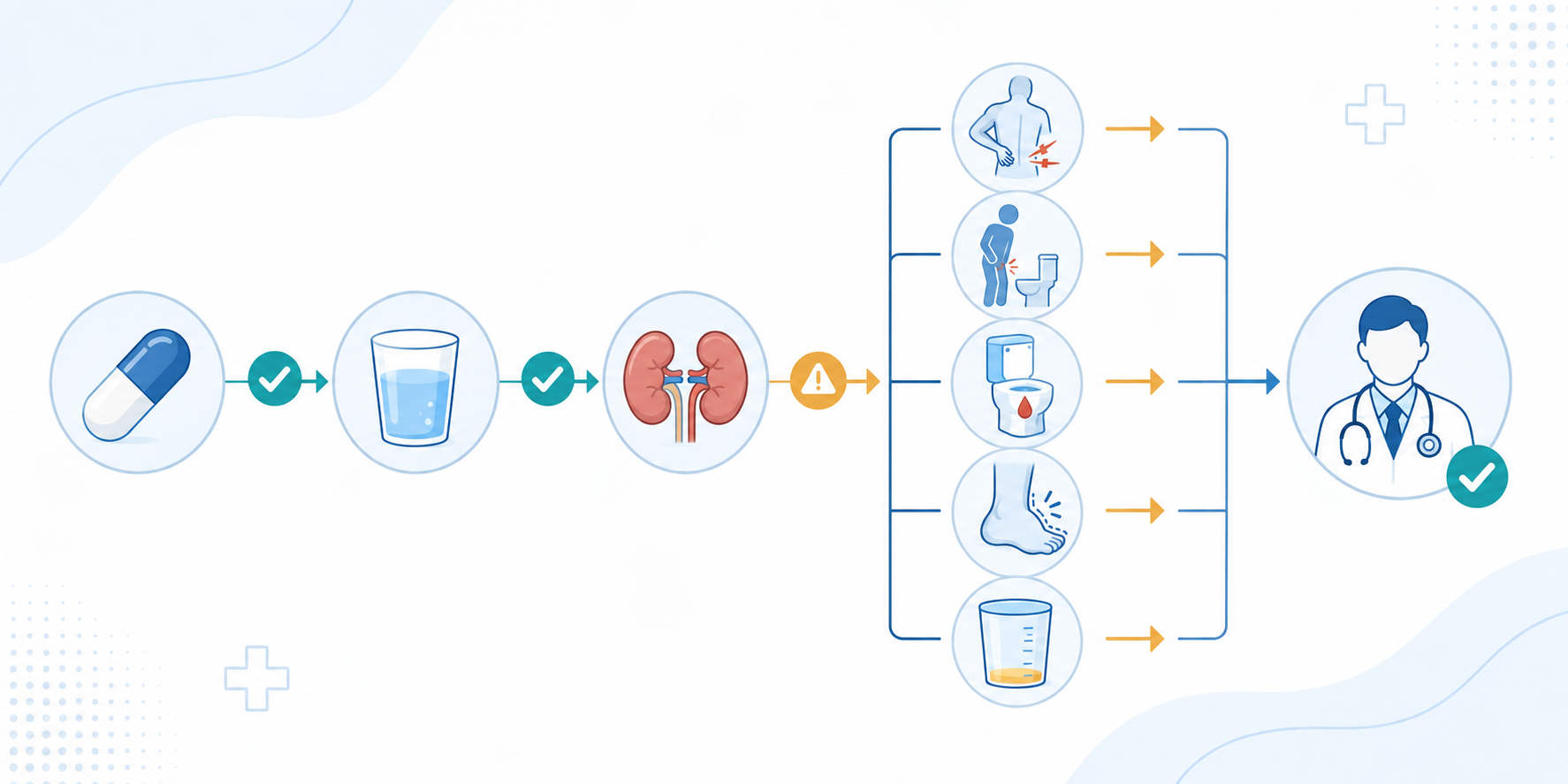
    The current alli Drug Facts label says to stop using the product and ask a doctor if you develop severe or continuous abdominal pain, or symptoms that could indicate kidney injury or a kidney stone. The FDA lists these kidney-related warning signs:

    • Severe pain in the back or groin.
    • Painful urination.
    • Blood in the urine.
    • Swelling of the feet or legs.
    • Urinating less often than usual.

    These symptoms are not specific to alli and can have many causes. The point is not to diagnose yourself from a checklist. It is to avoid continuing a potentially relevant medicine while waiting to see whether a serious symptom goes away. Seek urgent care for severe pain, inability to urinate, heavy blood in the urine, fainting, confusion, trouble breathing, or rapidly worsening swelling.

    Alli kidney warning symptoms: educational pathway from capsule and hydration to kidney warning signs and clinician visit
    Kidney warning signs after starting orlistat deserve a prompt medication review and medical evaluation.

    What should you do after an alli kidney warning?

    1. Check the active ingredient and dose. Confirm whether your product contains orlistat 60 mg and compare its instructions with the current Drug Facts label.
    2. Review your medical history. If you have had kidney stones or kidney disease, contact a pharmacist or clinician for individualized advice.
    3. Review every medicine and supplement. Include vitamins, diabetes medicines, thyroid medicine, seizure medicine, transplant medicine, and other weight-loss products.
    4. Use the intended diet. Do not treat alli as permission to eat a high-fat diet. A lower-fat calorie-controlled pattern reduces predictable gastrointestinal side effects.
    5. Know your stop rules. If warning symptoms appear, stop and seek medical advice rather than taking another dose to test what happens.
    6. Reassess benefit. If the medicine is not helping or side effects make it difficult to continue, ask what alternative plan is appropriate.

    Do not combine alli with another weight-loss medicine or an unregulated fat blocker without professional guidance. “Natural” does not guarantee that a supplement is safe for the kidneys, and stacking products makes it harder to identify the cause of a side effect.

    How does alli compare with prescription weight-loss treatment?

    Alli and prescription obesity medicines are different interventions. Alli reduces absorption of some dietary fat in the gut. Prescription options may work through appetite, satiety, glucose regulation, or other mechanisms, and they have their own eligibility criteria, contraindications, side effects, and coverage rules. A comparison based only on price or a testimonial can miss the clinical question: which treatment is appropriate for this person’s health risks and goals?

    Our guide to insurance coverage for weight-loss medication explains why a prescription may be covered for one indication but excluded for another. Our Medicare GLP-1 Bridge guide covers a separate CMS pathway and should not be confused with OTC alli. If you are considering a supplement for gut health, our evidence review of probiotics for weight loss explains why a plausible mechanism is not the same as a proven outcome.

    What the FDA update does—and does not—mean

    Question Practical interpretation
    Is alli being recalled? The FDA announcement describes a labeling change, not a general recall.
    Does every user need kidney testing? Not automatically. A clinician can decide based on symptoms, history, and risk factors.
    Is kidney injury common? The FDA describes it as rare. The 12 reports are safety signals, not an incidence rate.
    Does the warning prove alli never works? No. It adds risk information; it does not remove the approved use with diet and exercise.
    Can someone with prior stones start it alone? The FDA advises asking a health professional before use.

    Alli kidney warning: questions to ask a pharmacist

    • Does my history of kidney stones, reduced kidney function, diabetes, or high blood pressure change the risk?
    • Could any current medicine interact with orlistat?
    • Should I take a multivitamin, and when should it be separated from other medicines?
    • What symptoms should prompt me to stop immediately or seek urgent care?
    • What amount of weight loss or health improvement would make continuing worthwhile?
    • What evidence-based alternatives fit my medical history and insurance situation?

    Frequently asked questions

    Is alli safe after the alli kidney warning?

    Do not assume that it is safe to start on your own. The FDA specifically advises people with a history of kidney disease or kidney stones to ask a health care provider before using alli. Prior stone type, kidney function, hydration, diet, and other medicines may matter.

    Should I stop alli if I have mild stomach side effects?

    Mild gastrointestinal effects can occur because orlistat changes how dietary fat is handled. Follow the current label and ask a pharmacist if symptoms persist, are severe, or interfere with daily life. Severe or continuous abdominal pain and kidney warning signs require medical advice.

    Can I take alli with a GLP-1 medication?

    Do not combine them without the prescribing clinician or pharmacist reviewing the plan. There is no general rule that combining weight-loss medicines improves results, and overlapping gastrointestinal effects can complicate safety monitoring.

    Does drinking more water eliminate the kidney risk?

    No. Adequate hydration is generally important for health, but it cannot guarantee prevention of a medicine-related kidney problem. Do not use extra water as a reason to ignore pain, blood in the urine, swelling, or reduced urination.

    Is alli the same as Xenical?

    Both contain orlistat, but alli is the 60 mg nonprescription product and Xenical is the higher-strength prescription product. They are not interchangeable instructions. Use the label and prescription directions for the exact product you have.

    Bottom line

    The 2026 alli kidney warning makes the safety conversation around this medicine more complete. Kidney injury and kidney stones appear to be rare, but the possible complications can be serious. People with a history of kidney disease or kidney stones should ask a professional before starting, and anyone who develops severe back or groin pain, painful urination, blood in the urine, swelling, or less frequent urination should stop and seek medical advice. Treat alli as a medicine—not a harmless shortcut—and weigh its potential benefit against your personal risks, other treatments, and long-term weight-management plan.

    Sources and further reading


    Written and edited by: Denny Jaeyong Choi (JD), INSEAD MBA.
    Scientific advisory input: Pierre Theurey, PhD — RockBio co-founder and metabolic-science advisor.

    Medical information disclaimer: This article is for general education and does not replace individualized medical advice, diagnosis, or treatment. Medication labels and regulatory guidance can change. Consult a qualified health professional before starting, stopping, or combining medicines, especially if you have kidney disease, kidney stones, take prescription medicines, or are pregnant or breastfeeding.

  • Do Probiotics Help With Weight Loss? What the 2026 Evidence Shows

    Do Probiotics Help With Weight Loss? What the 2026 Evidence Shows

    Quick answer: Probiotics are not a proven stand-alone weight-loss treatment. A 2026 meta-analysis of randomized trials found no statistically significant reduction in body weight, although it found modest changes in BMI and fat-related measures that were not robust in sensitivity analyses. The practical takeaway is simple: a probiotic may be reasonable for a specific digestive-health goal, but probiotics for weight loss should not replace an evidence-based nutrition plan, physical activity, or clinician-prescribed obesity treatment.

    Published: September 6, 2026 · Last updated: September 7, 2026

    Searches for “probiotics for weight loss” often lead to confident claims about a “better” gut microbiome, faster fat loss, or one ideal strain. The biology is more complicated. Probiotic products contain different organisms, doses, and combinations, and a result observed with one strain cannot automatically be applied to another product on a store shelf.

    Key takeaways

    • Weight loss: the newest randomized-trial meta-analysis did not find a statistically significant reduction in body weight.
    • Body composition: small BMI and fat-mass signals appeared, but they were sensitive to study selection and should be viewed as preliminary.
    • Strain matters: “probiotic” is a broad category, not one standardized intervention. Benefits may depend on the strain, dose, duration, and person.
    • Food first: fiber-rich foods, adequate protein, sleep, and a sustainable calorie pattern have a larger role in weight management than a supplement claim.
    • Safety: healthy adults usually report mild gastrointestinal effects, but people who are seriously ill or immunocompromised should ask a clinician before using probiotics.

    What are probiotics?

    Probiotics are live microorganisms intended to provide a health benefit when consumed or applied to the body. They may be found in foods such as yogurt and fermented products, as well as in dietary supplements. The National Center for Complementary and Integrative Health explains that different probiotics can act differently in the body; possible mechanisms include interactions with the existing microbiome, production of metabolites, and effects on immune signaling.

    That definition is important because a probiotic capsule is not the same thing as a general “gut health” product. The number of organisms, the exact strain, how long the product remains viable, storage conditions, and the product’s intended use can all matter. An attractive label or a very large colony-forming-unit number does not, by itself, establish a weight-loss benefit.

    What does the newest evidence say about probiotics for weight loss?

    A systematic review and meta-analysis published in June 2026 pooled 10 randomized controlled trials involving 633 adults with overweight or obesity. The researchers compared probiotic or synbiotic interventions with placebo and evaluated body weight, BMI, fat mass, body-fat percentage, and lean body mass.

    Outcome 2026 review finding How to interpret it
    Body weight No statistically significant difference There is not strong evidence that the supplements reliably make the scale go down.
    BMI Modest statistical reduction The result was heterogeneous and became borderline after a sensitivity analysis.
    Fat mass or body-fat percentage Small statistical effect The effect lost statistical significance in a sensitivity analysis.
    Lean body mass No statistically significant difference No evidence of a dependable lean-mass benefit from the short interventions.

    The authors concluded that short-term supplementation may produce modest changes in BMI or adiposity-related measures, but they emphasized that the findings were preliminary. The trials were also short, generally eight to 12 weeks, and the products and study designs varied. That makes it difficult to name one “best probiotic for weight loss” from this evidence alone.

    This is consistent with the NIH Office of Dietary Supplements fact sheet. It summarizes earlier trials in which some strains were associated with small reductions in visceral fat or body weight, while other trials found no effect. Taken together, the evidence suggests that any effect is likely to be strain-specific and small, rather than a universal property of all probiotics.

    Why probiotics for weight loss remain promising—but not a prescription

    The gut microbiome participates in digestion, nutrient processing, immune signaling, and production of compounds such as short-chain fatty acids. Those pathways are biologically plausible ways for gut microbes to influence appetite, energy balance, and inflammation. But plausible biology is not the same as a clinically meaningful result in people.

    Human studies also show why generalization is difficult. Two people can respond differently to the same probiotic. A strain may survive in one person’s gut temporarily and have little measurable effect in another. A fermented food, a single-strain supplement, and a multi-strain synbiotic are not interchangeable exposures. Diet, medication use, age, sex, baseline BMI, bowel habits, and underlying illness can all influence the outcome.

    For this reason, microbiome testing sold directly to consumers should be interpreted cautiously. A report can describe which organisms were detected in a sample, but it does not automatically tell you which supplement will produce weight loss or improve your health. Ask what clinical decision the test is intended to change before paying for it.

    Probiotics for weight loss research: educational illustration of the gut microbiome and variable metabolic health outcomes
    Gut biology may help explain why probiotics are being studied, but current human results remain variable and modest.

    How to judge a probiotic claim without getting misled

    1. Identify the exact outcome. “Supports gut health” is not the same as reducing body weight, waist circumference, blood glucose, or cardiovascular risk.
    2. Look for strain-level information. A genus name such as Lactobacillus is not enough to reproduce a study. The strain designation and dose should be clear.
    3. Check the comparator. A placebo-controlled randomized trial is more informative than a testimonial or an uncontrolled before-and-after story.
    4. Ask how large the effect was. A statistically significant result can still be too small to matter to a person’s health or daily life.
    5. Check the duration. A few weeks of supplementation cannot establish durable weight maintenance or long-term safety.
    6. Separate an association from a treatment effect. People with different body weights can have different microbiome profiles, but that does not prove that changing the profile will cause weight loss.

    Food, fiber, and probiotics: what should come first?

    For most adults, the most useful first step is to improve the overall dietary pattern rather than chase a single organism. Beans, lentils, vegetables, fruit, whole grains, nuts, and seeds provide fiber and a broad range of fermentable substrates. A gradual increase is more comfortable than a sudden large dose, especially for people who already experience bloating.

    Protein-rich foods, regular movement, resistance training, adequate sleep, and a calorie pattern that can be maintained over time have more practical importance for weight management. People using an FDA-approved obesity medication should not stop or change it because a supplement advertisement makes a stronger promise. If nausea, constipation, diarrhea, or appetite changes are affecting treatment, discuss those symptoms with the prescribing clinician.

    For context, our guide to insurance coverage for weight-loss medication explains how evidence-based prescription treatment differs from supplement marketing. Readers interested in metabolic monitoring can also see our cash-price guide to continuous glucose monitors.

    Who should ask a clinician before taking a probiotic?

    Most healthy adults tolerate common probiotic products, and gas or temporary bloating are the most typical complaints. However, NIH guidance notes that serious infections have been reported, particularly among people who are severely ill or immunocompromised. People with a central venous catheter, critical illness, major immune suppression, or a complex medical history should not assume that a supplement is risk-free.

    The FDA has also warned health care professionals about the risk of severe, potentially fatal infections in premature infants given probiotics. This is a reminder that “natural” is not a synonym for universally safe. Infants, people receiving intensive medical care, and anyone with significant immune or gastrointestinal disease need individualized advice.

    Ask a pharmacist or clinician before starting a product if you are pregnant, caring for a child, recovering from a serious illness, taking immunosuppressive medication, or using multiple supplements. Seek medical care for persistent vomiting, blood in the stool, severe abdominal pain, dehydration, fever, or rapidly worsening symptoms.

    Are probiotics regulated like medications in the United States?

    No single regulatory category covers every product called a probiotic. NCCIH explains that the FDA may regulate a product as a dietary supplement, food ingredient, or drug depending on its intended use. Many probiotic products are sold as dietary supplements, which do not require FDA approval before marketing in the same way an approved drug does.

    The FDA regulates dietary supplements under a different framework from conventional foods and drug products. Manufacturers and distributors are responsible for evaluating safety and labeling, while the agency can act against adulterated or misbranded products after they reach the market. A supplement label may make certain structure/function statements, but disease-treatment claims are subject to stricter requirements.

    That difference explains why a product can be legally sold without having proved that it causes weight loss. Look for transparent labeling, a lot or expiration date, storage instructions, and an independent quality-testing program when available. These steps do not prove efficacy, but they can reduce avoidable uncertainty about the product itself.

    A practical decision checklist

    • What problem am I trying to solve: diarrhea after antibiotics, constipation, bloating, or weight management?
    • Is there human evidence for this exact strain and outcome?
    • What benefit would be large enough to justify the cost?
    • Could food, fiber, hydration, medication review, or medical evaluation address the problem more directly?
    • Do I have a condition or medication that makes infection or interaction risk more important?
    • How will I decide whether to stop if there is no meaningful benefit?

    Frequently asked questions

    What is the best probiotic for weight loss?

    There is no evidence-based universal winner. The 2026 review found variable products and preliminary, modest signals rather than a dependable weight-loss effect. A strain studied for one digestive outcome should not be assumed to work for weight management.

    Can probiotics reduce belly fat?

    Some earlier trials reported small changes in visceral fat or waist-related measures, but findings are inconsistent. The latest evidence does not justify promising a reliable reduction in belly fat from a general probiotic supplement.

    How long should I take a probiotic for weight loss?

    There is no validated duration for weight loss. The newest randomized studies were generally short, around eight to 12 weeks, and did not establish durable weight maintenance. Do not continue indefinitely without a clear goal and a clinician’s input when medical conditions are involved.

    Can I take a probiotic with a GLP-1 medication?

    Do not assume that combining them improves weight loss. Review the specific product and your symptoms with the prescribing clinician or pharmacist, particularly if you have vomiting, diarrhea, constipation, dehydration, or significant abdominal pain.

    Are fermented foods the same as probiotic supplements?

    No. Some fermented foods contain live microorganisms, but the organisms and amounts vary. A supplement is also not automatically better. Choose the option that fits your overall diet, tolerance, budget, and health goals.

    Bottom line

    Probiotics for weight loss are scientifically interesting but not a proven shortcut. The best current evidence points to no reliable reduction in body weight and, at most, small and uncertain changes in BMI or fat-related measures over short periods. Treat probiotic claims as strain-specific questions, keep the expected benefit realistic, and prioritize interventions with stronger evidence for your actual goal.

    Sources and further reading


    Written and edited by: Denny Jaeyong Choi (JD), INSEAD MBA.
    Scientific advisory input: Pierre Theurey, PhD — RockBio co-founder and metabolic-science advisor.

    Medical information disclaimer: This article is for general education and does not replace individualized medical advice, diagnosis, or treatment. Product formulations, evidence, and safety information can change. Consult a qualified health professional before starting a supplement, especially if you have a medical condition, take prescription medicines, or are caring for an infant.

  • Metabolic Syndrome Criteria: The 5 Risk Factors Explained

    Metabolic Syndrome Criteria: The 5 Risk Factors Explained

    The metabolic syndrome criteria are five common measurements used together to identify elevated cardiometabolic risk. This guide explains the usual U.S. thresholds, what they mean, and when to discuss the results with a healthcare professional.

    Written and edited by: Denny Jaeyong Choi (JD), INSEAD MBA

    Professional affiliations are provided for identification only and do not imply employer endorsement of this article.

    Metabolic syndrome is not one single disease. It is a combination of cardiometabolic risk factors that tend to occur together and can raise the risk of heart disease, stroke, and type 2 diabetes.

    Illustration of the metabolic syndrome criteria, including waist measurement, blood pressure, glucose, cholesterol, and activity icons
    Metabolic syndrome screening considers several measurements and blood-test results together.

    Metabolic syndrome criteria: quick answer

    In the commonly used adult definition, metabolic syndrome is present when a person has at least three of five risk factors: a large waist circumference, elevated triglycerides, low HDL cholesterol, elevated blood pressure, or elevated fasting glucose. A diagnosis should be made by a qualified healthcare professional because thresholds and treatment decisions can vary by guideline, sex, ancestry, medical history, and medication use.

    The 5 metabolic syndrome criteria

    The following cutoffs are commonly used in U.S. patient education materials from the American Heart Association and the National Heart, Lung, and Blood Institute. They are a screening framework, not a substitute for a clinical assessment.

    Risk factorCommon thresholdWhat it represents
    Waist circumferenceMore than 40 in (102 cm) in men or 35 in (88 cm) in womenAbdominal fat and related metabolic risk
    Triglycerides150 mg/dL or higher, or treatment for high triglyceridesA type of fat in the blood
    HDL cholesterolBelow 40 mg/dL in men or 50 mg/dL in women, or treatment for low HDLLower protective HDL cholesterol
    Blood pressure130/85 mm Hg or higher, or treatment for hypertensionPersistent pressure-related cardiovascular risk
    Fasting glucose100 mg/dL or higher, or treatment for elevated glucoseImpaired glucose regulation

    Having any three of the five factors meets the usual definition. Having only one or two does not mean the findings are unimportant; they still deserve attention and follow-up.

    Infographic of the five metabolic syndrome criteria: waist circumference, blood pressure, fasting glucose, triglycerides, and HDL cholesterol
    Metabolic syndrome is commonly identified when at least three of five criteria are present.

    Why does metabolic syndrome matter?

    The cluster is useful because the combined pattern can signal higher long-term cardiometabolic risk than any single measurement alone. The National Institute of Diabetes and Digestive and Kidney Diseases describes metabolic syndrome as a group of conditions that increases the risk of heart disease, diabetes, and stroke.

    Many of the component conditions have no obvious symptoms. A person may feel well while blood pressure, fasting glucose, triglycerides, or HDL cholesterol are outside the preferred range. That is why routine measurements and laboratory testing can be more informative than symptoms alone.

    What should you do if you meet 3 criteria?

    1. Confirm the measurements. Ask how the waist was measured and whether blood pressure was taken correctly and repeated when appropriate.
    2. Review the full picture. A clinician may consider your medications, family history, sleep, physical activity, diet, smoking status, kidney health, and other risk factors.
    3. Make a practical plan. Depending on your results, the plan may include nutrition and activity changes, weight management support, blood pressure or lipid treatment, or evaluation for abnormal glucose.
    4. Track changes over time. Trends can be more useful than a single reading. Keep a record of home readings or laboratory results if your healthcare professional recommends it.

    Important limitations of the 5-criterion checklist

    Waist cutoffs are not universal. Thresholds can differ by ancestry and region, and clinicians may use other measurements when appropriate. A fasting glucose result is also not the same as a diagnosis of diabetes. Do not start, stop, or change medication based only on a checklist or online article.

    Bottom line

    Metabolic syndrome means that at least three commonly measured risk factors are present together. The checklist can help you prepare for a conversation with a healthcare professional, but the next step is confirmation and an individualized risk-reduction plan.

    Sources

    Written and edited by: Denny Jaeyong Choi (JD), INSEAD MBA.
    Published: September 3, 2026
    Last updated: September 7, 2026