Tag: probiotics

  • Can Pendulum Probiotics Help With GLP-1, Weight Loss, or Weight Regain?

    Published: October 14, 2026 · Last updated: October 14, 2026

    You see a probiotic labeled “GLP-1,” recognize Akkermansia from weight-management research, and wonder whether it could make a prescription work better—or help keep the weight off afterward. Those are reasonable questions. They are also three different research questions, not one.

    Quick answer

    Pendulum GLP-1 Probiotic is not a GLP-1 receptor agonist medicine. Its manufacturer identifies the hormone-support rationale as preclinical and says the product is not intended for weight loss. In the sources checked for this review, we did not identify a published human trial showing that this product prevents weight regain after stopping semaglutide or tirzepatide. A separate Pendulum five-strain formulation has a small diabetes trial; a separate pasteurized Akkermansia preparation has a diet-induced weight-maintenance trial. Neither is proof for the three-strain GLP-1 product or for post-medication maintenance. Manufacturer description; Pendulum formulation trial; Akkermansia maintenance trial.

    What matters most

    • Match the formula, not just the brand. GLP-1 Probiotic, Glucose Control, and Akkermansia are not interchangeable evidence labels.
    • Separate appetite, blood glucose, and weight. A cravings survey or glucose result cannot answer a weight-regain question.
    • Butyrate-producing bacteria have a plausible role. That does not identify the benefit attributable to one strain in a multi-strain capsule.
    • Ask about the comparison. A result versus placebo is different from a testimonial, a baseline change, or an experiment in cultured cells.

    This is an evidence guide, not a product ranking. Popularity is not evidence of efficacy. Pendulum’s products provide a useful real-world example of how consumers can evaluate microbiome and GLP-1 claims.

    Which Pendulum product are we talking about?

    These distinctions were checked on October 14, 2026. Product descriptions can change. The table is not a full Supplement Facts transcription; check the current bottle for amounts, excipients, storage, and serving instructions. On a phone, swipe inside the table.

    One company, different formulations and evidence
    ProductDescription relevant to this questionEvidence boundary
    GLP-1 ProbioticManufacturer lists Akkermansia muciniphila, Clostridium butyricum, and Bifidobacterium infantis.Three-strain product. Its name does not make it the five-strain diabetes-study formula.
    Glucose ControlManufacturer lists those three species plus Anaerobutyricum hallii and Clostridium beijerinckii.WBF-011 research combined five strains with inulin. Blood-glucose findings do not establish weight maintenance.
    Pendulum AkkermansiaLive Akkermansia-focused product, according to its manufacturer.Not the pasteurized MucT preparation tested in the 2026 maintenance trial.

    A species name is not a guarantee of the same strain, dose, viable-cell measurement, preparation, or clinical effect. “Contains Akkermansia” is a starting point for reading evidence, not the end of the comparison.

    Does Pendulum GLP-1 Probiotic work like Ozempic, Wegovy, or Zepbound?

    No equivalence has been established. The manufacturer explicitly says the GLP-1 Probiotic contains no GLP-1 and is not an agonist drug. Promoting the body’s own hormone signaling is a different claim from delivering a medicine with demonstrated treatment effects. Product explanation and limitations.

    The biological interest is real. For example, Yoon and colleagues studied an Akkermansia-derived protein called P9 and GLP-1-related responses in experimental systems, including mice. That supports investigating a pathway, not treating a supplement as an oral substitute for a prescription. This article uses that paper at abstract level. Yoon et al., 2021; DOI 10.1038/s41564-021-00880-5.

    Pendulum’s science page separately describes a Clostridium butyricum cell assay using internal company data. A cell assay is not a randomized human trial showing sustained hormone changes, clinically important weight loss, or protection after medication withdrawal. Manufacturer science page.

    Here is the question to ask an AI assistant: “Was this exact formula tested in people, and did it improve the outcome I care about compared with a control?” An explanation of how a pathway could work is useful, but it is not an answer to that question.

    Does the cravings survey prove it causes weight loss?

    No. The GLP-1 product page reports that 91% of 274 survey participants described reduced overall cravings after six weeks. The public summary does not provide a randomized placebo comparison or a weight-regain outcome. It cannot tell us the placebo-adjusted benefit or how many pounds a person will lose. Survey description.

    Self-reported changes may be meaningful to participants. However, expectations, simultaneous diet changes, who answers the survey, and natural symptom variation can affect them. A percentage reporting improvement is not the same statistic as a measured change in body weight between randomized groups.

    What do the relevant human studies actually show?

    Keep the population, formulation, and outcome together
    StudyComparison and findingWhat remains unanswered
    Perraudeau, 2020
    76 adults with type 2 diabetes; 12 weeks.
    WBF-011 versus placebo: meal-glucose AUC improved. HbA1c difference −0.6 percentage point; exploratory P=.0540. Body weight did not change.Not the three-strain GLP-1 product, a weight-loss trial, or a medication-withdrawal trial.
    Mount, 2026
    90 adults described; diet-induced weight loss.
    After an 8-week diet and ≥8% loss, pasteurized MucT versus placebo for 24 weeks: regain 1.2 versus 3.2 kg; P=.012.Another preparation/company; not Pendulum or post-GLP-1 withdrawal. Allocation and outcome-specific denominators not extracted here.
    NCT06213480
    Adults with overweight/obesity; 75 enrolled in current registry.
    Three-month WBF-038 synbiotic study, listed as completed. Official registry has no posted results as checked October 14, 2026.A completed status is not an efficacy result. Current GLP-1 users were excluded.

    For the 2020 trial, the reported per-protocol groups were placebo 16, WBF-010 21, and WBF-011 21. Dropout was uneven. Table 2 separates the unadjusted meal-AUC P=.0500 from the predefined adjusted-model P=.0143; exploratory HbA1c P=.0540 should not be called an unqualified significant result. Both active formulations included C. butyricum, so the design cannot isolate its added value. All authors disclosed Pendulum employment and equity interests. Table 2, methods, and disclosures.

    Company involvement does not automatically invalidate research. It makes transparent methods, replication, and independent confirmation especially important. The fair description is an early glucose-control signal for a defined combination—not a proven weight-regain solution.

    The 2026 maintenance finding deserves attention, but the live-versus-pasteurized distinction matters. A result after dietary weight loss cannot be relabeled as a result after stopping a drug. The investigators also disclosed company and patent relationships. We used the public abstract and disclosure, not a complete extraction of the subscription-limited main text. Original trial record. See our fuller Akkermansia maintenance comparison.

    Can Pendulum prevent weight regain after stopping a GLP-1 drug?

    That benefit is not established in the human sources reviewed here. Preventing weight regain requires a study that follows people after medication withdrawal, compares the exact supplement against a suitable control, and measures weight over time. A blood-sugar study or a consumer cravings survey does not meet those conditions.

    The STEP 1 extension illustrates why the question matters. In its selected 327-person follow-up, participants previously receiving semaglutide regained about two-thirds of their earlier loss over the next year. Both medication and structured lifestyle support stopped; this was exploratory off-treatment follow-up, not a probiotic study. It does not predict every person’s trajectory or prove that a supplement prevents regain. Wilding et al., 2022; DOI 10.1111/dom.14725.

    If cost, access, side effects, or another reason may lead you to stop treatment, discuss the transition with the prescriber before relying on a replacement. Ask how weight, eating patterns, relevant glucose measures, and treatment options will be followed. A supplement decision should sit inside that plan, not stand in for it.

    Why include a butyrate-producing bacterium?

    Clostridium butyricum is a relevant organism to study because it can produce butyrate. Pendulum includes it in both the GLP-1 and Glucose Control product descriptions. This is a coherent biological rationale, but it does not tell us how much benefit one component contributes to the complete formula. Manufacturer strain description.

    A useful distinction is between adding living organisms and taking a butyrate compound. Neither can simply inherit the evidence for a higher-fiber diet. Exposure depends on the actual preparation and biological context; the relevant question remains the measured human outcome. Our fiber and SCFA review explains these boundaries.

    Does C. butyricum help Akkermansia grow?

    There is interesting preclinical evidence, but not a universal rule. An eight-week obese-mouse study used C. butyricum CGMCC 1.5205, while culture experiments used Akkermansia ATCC BAA-835. Butyrate, bacterial lysate, and culture supernatant promoted laboratory growth measured by optical density. Those are not Pendulum’s tested product strains, and optical density is not persistent human engraftment. Dong et al., 2025; DOI 10.4014/jmb.2509.09005.

    Importantly, another study found competition and inhibited Akkermansia growth with C. butyricum ATCC 19398 in a different culture and neonatal intestinal-disease model. This does not show that Pendulum is harmful to healthy adults. It shows why a species-level “always synergistic” claim is too broad. Tao et al., 2023; DOI 10.1128/msystems.00732-23.

    Could it support other bacteria too?

    A CBM588 study found that culture supernatant promoted growth of several Bifidobacterium species, including B. infantis. Heating or proteinase treatment removed the effect, suggesting a sensitive secreted factor rather than proving butyrate alone caused it. The work involved laboratory experiments and a mouse gut–lung/infection model—not a Pendulum weight-maintenance trial. Hagihara et al., 2025; DOI 10.1016/j.isci.2025.113502.

    The potential value of a butyrate producer is therefore worth investigating. But “biologically complementary” is not the same as “clinically proven synergy.” Demonstrating synergy needs suitable single-component and combination comparisons; showing lasting engraftment needs strain tracking after supplementation ends.

    How should I decide whether to try it?

    1. Name one goal. Are you asking about digestive symptoms, glucose management, appetite, or weight maintenance? Do not let a favorable result for one become a promise for another.
    2. Bring the exact label. Ask which study matches its formulation, dose, and population. A brand-wide list of publications is not enough.
    3. Keep prescribed care intact. Do not substitute a supplement for diabetes or obesity medication. FDA notes that supplements do not undergo the same premarket approval for safety and effectiveness as drugs. FDA consumer guidance.
    4. Agree on what would count as benefit. Choose a relevant observation and a review date with your clinician. Changing several products and your diet together makes attribution difficult.
    5. Include a stopping rule. If there is no meaningful benefit, persistent unwanted symptoms, or a change in your health, revisit the decision. More capsules are not a substitute for a better evidence match.

    A personal improvement can be worth discussing without proving the capsule caused it. Conversely, a null personal response does not disprove every strain’s biology. This is why product evaluation and self-observation should remain separate.

    Safety questions to ask first

    “Natural” does not mean risk-free. NCCIH advises particular caution with probiotics in people who are seriously ill or have compromised immune systems. Discuss use with a qualified clinician, especially during significant illness or complex treatment. The safety of one preparation in a selected trial cannot establish safety for everyone. NCCIH safety guidance.

    For use alongside a GLP-1 medicine, bring both product labels to the prescriber or pharmacist. This review does not establish an interaction-free combination or a way to prevent medication-related constipation, nausea, or diarrhea. Do not automatically interpret new symptoms as beneficial microbiome adaptation.

    Frequently asked questions

    Is Pendulum GLP-1 Probiotic “natural Ozempic”?

    No. A hormone-signaling rationale is not drug equivalence. The manufacturer’s own qualification distinguishes this probiotic from an agonist medicine.

    Which product has evidence relevant to my question?

    Start with the formula table above, then the outcome. Evidence about Glucose Control is not automatically evidence about GLP-1 Probiotic. If your main goal is preventing post-medication regain, this review does not identify a proven Pendulum choice.

    Should I add separate Akkermansia or C. butyricum capsules?

    The reviewed research does not establish that stacking products improves results. It can change strains, total exposure, and tolerability. Discuss the actual labels rather than assuming two promising organisms make a proven combination.

    Are live organisms better than pasteurized Akkermansia?

    Not by default. Judge each preparation by the relevant trial. A positive result for one cannot establish the superiority of all live or all pasteurized products. See the strain- and preparation-specific evidence review.

    Does a completed study mean the product works?

    No. Study completion, public results, peer review, and a positive clinical outcome are different milestones. Check the original trial record, not only a research-page status.

    Bottom line

    Pendulum offers a useful case study in next-generation probiotics: defined organisms, a plausible biological rationale, and some human research. The evidence should still be read formula by formula. Treat GLP-1 signaling, glucose control, dietary weight maintenance, and post-medication regain as separate claims. The next valuable result would be a controlled human trial matching the exact product and the exact question—not a stronger marketing analogy.

    Methods, source access, and transparency

    This targeted narrative review was prepared on October 14, 2026. We checked manufacturer product/science/research pages; used focused web and PubMed discovery searches for “Pendulum GLP-1 probiotic weight randomized,” “WBF-011 weight GLP-1,” and NCT06213480; and selected original sources relevant to formulation, human outcomes, and microbial cooperation. It is not a systematic review, meta-analysis, exhaustive trial inventory, or new pooled analysis.

    The starting material included our October 13 C. butyricum literature investigation: 1,546 unique PubMed records plus two citation-traced additions, with 127 selected reports organized and 30 checked in relevant original passages. Those counts are search/selection records, not 1,548 clinical trials or full-text validations. Only the selected microbial experiments cited here were reused and their relevant original XML passages rechecked.

    Access: the 2020 Pendulum paper’s methods, Table 2, discussion, and disclosures were read in PMC. The October 2026 official ClinicalTrials.gov JSON record was checked directly for NCT06213480; no results were posted. Mount and Yoon were assessed through public abstract/record information; Mount’s full main-text analysis and confidence intervals were not independently extracted. STEP 1 was used at abstract level here. Selected original passages were read for Dong, Tao, and Hagihara, not every supplement or dataset. Manufacturer internal assays and survey summaries were not independently audited. Missing or unpublished evidence remains a limitation, not proof that no other study exists.

    Disclosure: The author reports no financial relationship with Pendulum or its products. This article has no affiliate purchase links. He works in healthcare/biotechnology and has previously disclosed possible future interest in microbiome-product development; this article is not a recommendation of a competing ingredient or company.

    Update history: October 14, 2026 — Initial publication; formula-specific evidence, unposted trial results, and growth-versus-engraftment boundaries documented. Prepared with AI assistance. No independent scientific or medical review is claimed for this article.

    Sources and further reading

    1. Pendulum GLP-1 Probiotic product page and manufacturer science page. Marketing descriptions are not independent efficacy assessments.
    2. Perraudeau et al. BMJ Open Diabetes Research & Care, 2020. PMID 32675291; DOI 10.1136/bmjdrc-2020-001319.
    3. Mount et al. Pasteurized MucT weight-maintenance trial, 2026. DOI 10.1038/s41591-026-04394-7.
    4. ClinicalTrials.gov: NCT06213480. Registry status/results checked October 14, 2026.
    5. Wilding et al. STEP 1 extension, 2022. DOI 10.1111/dom.14725.
    6. Yoon et al. Akkermansia P9/GLP-1 experiments, 2021. DOI 10.1038/s41564-021-00880-5.
    7. Dong et al. C. butyricum and Akkermansia growth experiments, 2025. DOI 10.4014/jmb.2509.09005.
    8. Tao et al. Contrasting Clostridium/Akkermansia interactions, 2023. DOI 10.1128/msystems.00732-23.
    9. Hagihara et al. CBM588/Bifidobacterium mechanistic experiments, 2025. DOI 10.1016/j.isci.2025.113502.
    10. FDA: Dietary supplements; NCCIH: Probiotic usefulness and safety.

    Written and edited by: Denny Jaeyong Choi (JD), INSEAD MBA

    Medical information notice: General education only, not personal diagnosis, treatment, or a recommendation to start, stop, or replace a medicine. Discuss supplement use and weight-maintenance planning with a qualified health professional.

  • Autism, Probiotics, and the Gut Microbiome: What Human Trials Actually Show

    Microbiome & Neurodevelopment · Evidence Review

    Published: October 10, 2026 · Last updated: October 10, 2026
    Written and edited by: Denny Jaeyong Choi (JD), INSEAD MBA

    A probiotic study can make three very different headlines: a child’s stomach feels better, a social-functioning score changes, or stool bacteria shift. Those are not interchangeable results.

    That distinction matters when families encounter promising microbiome research. It also matters when developers build apps to track food, sleep, gut symptoms, and daily life. More information can help us ask better questions. It does not automatically tell us which treatment works.

    Quick answer

    Some specific probiotic formulations have produced encouraging results in autistic children, but human trials remain mixed. They do not establish probiotics as a general treatment for autism. Benefits for gut symptoms, social functioning, adaptive skills, and overall autism-related scores must be evaluated separately. A published meta-analysis rated its small pooled behavioral effect as low-certainty evidence. Huang et al., 2025.

    Evidence for one formulation does not validate another strain, a butyrate supplement, or a personalized recommendation generated by an app. A digital record can organize observations; it cannot, by itself, establish causation.

    Start with the person, not a “better microbiome” score

    Autism is a neurodevelopmental condition, not a metabolic disease. That does not make gut health irrelevant. Pain, gastrointestinal conditions, restricted eating, and sleep difficulties deserve attention in their own right. NICE guidance addresses these coexisting problems separately from autism’s core features. NICE support and management guidance.

    Before interpreting a study, identify its target: less abdominal discomfort, easier daily activities, social communication, repetitive behavior, or a laboratory measurement. A change in one category does not demonstrate improvement in all the others.

    Our editorial goal is to understand comfort, communication, participation, and quality of life—not to treat every autistic difference as something to eliminate. Individual preferences and support needs belong in that conversation.

    What happened in human trials?

    The following is a selected comparison, not a complete trial inventory or product ranking. These trials tested different formulations in different children over different periods. Study regimens describe the research; they are not dosing advice.

    Six selected placebo-controlled probiotic trials in autistic children
    Trial and participantsIntervention and durationResult that mattersInterpretation boundary

    Mazzone, 2024


    43 randomized and completed; 21 active, 22 placebo. Recruitment ages 2–8.
    L. reuteri DSM 17938 + ATCC PTA 6475; two tablets daily, each providing at least 2 × 10⁸ CFU; six months.No overall ADOS-2 calibrated-severity benefit (P = .99). Secondary SRS total T-score means: 88.50→80.70 versus 84.59→85.09; group-by-time P = .031.Promising secondary social-functioning signal in a small pilot. Adjusted score-difference confidence interval not extracted. Not a trial of IMB015 or butyrate-producing bacteria.

    Santocchi, 2020


    85 randomized; 63 completed: 31 active, 32 placebo. Ages 18–72 months.
    Eight-strain De Simone formulation; 450 billion CFU per sachet; two daily in month one, then one daily for five months.Primary ADOS-CSS mean changes: −0.65 versus +0.03 points; P = .08. Some GI, sensory, and adaptive outcomes improved in exploratory subgroups.Whole-trial primary result was not statistically significant. Attrition and small subgroups limit certainty; subgroup results do not establish a broad benefit.

    Liu, 2019


    80 boys randomized; 71 completed. Ages 7–15.
    L. plantarum PS128 versus placebo; four weeks. Capsules contained 3 × 10¹⁰ CFU; daily frequency remains unverified in our extraction.Overall endpoint ABC-T and SRS total scores did not differ between groups (P = .53 and .63). Some younger-subgroup findings were positive.Do not substitute subgroup or within-group findings for overall comparative efficacy. No direct extrapolation to girls, adults, or long-term use.

    Narula Khanna, 2025


    180 randomized and completed; 90 per arm. Ages 2–9.
    Twelve-strain preparation; 9 billion CFU per sachet, twice daily; three months. Caregivers blinded; study single-blinded.SRS-2 total T-score means: 76.59→70.49 versus 75.49→72.39. Table 2 reports endpoint between-group P = .010. Within-arm declines: 6.10 and 3.10 points.Positive comparative behavioral signal. A baseline-adjusted treatment-effect CI was not extracted. Diet and concurrent support differed. Some GI P values describe within-arm change, not superiority.

    de Queiroz, 2026


    182 randomized: placebo 57, K11 65, K11-TMAX 60. Ages 3–11.
    Specific kefir-derived mixtures, one with added micronutrients, versus placebo; 90 days. Not ordinary kefir consumption.Day-90 adjusted Vineland-3 composite differences versus placebo: +1.45 points (95% CI −0.65 to +3.56) and +1.06 (−1.17 to +3.29).Both intervals include zero. Within-group improvements do not establish superiority. Authors characterize comparisons as exploratory; the enriched formulation cannot isolate a probiotic-only contribution.

    Agrawal, 2026


    37 randomized; 23 included in paired stool analysis: active 9, placebo 14. Ages 2–5.
    Eight-strain preparation; 450 billion CFU twice daily for one month, then once daily for three months; placebo comparison.No significant overall diversity/community differences. Results report no between-group differences on behavioral questionnaires or stool acetate, propionate, butyrate, and valerate.Small analysis set with attrition. A within-probiotic-arm Bifidobacteriaceae increase is not proof of comparative clinical benefit. Outcome-specific analysis counts and supplements were not fully reconciled.

    ADOS-CSS: observer-based calibrated severity score. SRS: Social Responsiveness Scale. Vineland: adaptive functioning. CFU: colony-forming units—not a measure of effectiveness. Scores and outcome hierarchies differ; the rows should not be pooled informally. Access details are below.

    A positive result still needs the right denominator

    The 2025 single-blinded trial deserves inclusion alongside null trials. However, its headline percentages should not become “autism improved by 48%.” Table 2 describes movement among score-severity categories. Table 4’s GI P values are attached to within-arm comparisons. We retain the positive behavioral signal without presenting every favorable statistic as a verified treatment-versus-placebo effect. Original Tables 2–4.

    “Significant here, not significant there” is not the comparison

    In the 2026 kefir-derived trial, participants in active arms improved from baseline. The adjusted differences against placebo nevertheless included zero. Those comparisons leave uncertainty about benefit; they do not prove equivalence either. The important question is how much more participants changed than they would have under the comparison condition. Results, baseline-adjusted analysis.

    Does the meta-analysis settle the question?

    Huang and colleagues pooled eight trials with 465 participants: standardized mean difference −0.19 (95% CI −0.38 to −0.01), with low certainty. That is not a 19% improvement or a responder percentage. Their search ended December 13, 2023; the 2025 publication date does not mean the later trials above were included. We have not recalculated the pooled estimate. Published meta-analysis.

    Bacteria, metabolites, and clinical benefit are different steps

    A prebiotic trial illustrates the distinction. Palmer and colleagues randomized 41 parent–child pairs to GOS or placebo for six weeks, with dietary advice in both arms. In 33 paired stool samples, reported Bifidobacterium relative-abundance change was +5.9 versus −0.4 percentage points. Behavioral outcomes did not show significant group differences. Changing a microbial measurement is not the same as improving daily functioning. Palmer trial, published 2025; online 2024.

    Nor does a microbiome association establish autism’s cause. An observational study of 247 participants supported a pathway linking autism-related dietary preferences, diet diversity, and stool characteristics to microbiome differences. It cannot prove causation—or assign parental blame. Yap et al., 2021; abstract-level assessment.

    Where does butyrate-producing bacteria research fit?

    A live butyrate-producing bacterium, oral sodium butyrate, and dietary fiber are different interventions. Evidence about one cannot simply be transferred to the others. Our fiber and short-chain fatty acid review explains the metabolic background; it is not autism efficacy evidence.

    ClinicalTrials.gov record NCT06677840 describes a Clostridium butyricum GKB7 study: a planned 20-person open-label pilot followed by a 90-person randomized placebo-controlled stage in ages 4–15. The second stage includes three blinded months and an open-label extension. On our October 10, 2026 check, the record displayed “Recruiting,” a July 9, 2026 update, and no posted results.

    That establishes a registered research question, not benefit, product authorization, or confirmation that enrollment is proceeding exactly as planned. It also says nothing about a different C. butyricum strain. This review does not establish efficacy for butyrate supplementation in autism.

    IMB015 is a mechanism study, not a pediatric prescription

    A 2025 mouse study of L. reuteri IMB015 connected intestinal metabolism, immune cells, and behavioral tests. It reported improvements in social-novelty recognition and some other measures, but not sociability. Fecal glutamate/GABA ratios fell; the GABA increase itself was not significant. These findings do not demonstrate normalized neurotransmission in a child’s brain or human treatment benefit. IMB015 is also not the two-strain human formulation in the table. Park et al., selected Results and Discussion.

    Related background: microbiome, butyrate, and the intestinal barrier. Findings in bowel disease or animal models are not substitutes for autism trials.

    What a digital-health app can—and cannot—add

    Our proposed starting point for digital health is better observation and communication, not an automated “autism improvement” score or supplement prescription. This is an editorial design proposal, not an app-validation result.

    A record could organize the following information for discussion with a clinician. It should reflect the autistic person’s preferences and accessible ways of communicating, not only a caregiver’s interpretation.

    Example record structure—not a validated clinical instrument
    DomainDescriptive recordAvoid interpreting it as
    Gut comfortStool frequency, discomfort, pain reports, and timing; distinguish self-report from observer report.A diagnosis of “dysbiosis” or proof of a specific bacterial deficiency.
    Food and sleepChanges in intake, routine, bedtime, awakenings, and relevant illness.A reason to restrict foods or prescribe a microbiome intervention automatically.
    Meaningful daily goalsParticipation, communication access, or an individually chosen activity; include the person’s perspective.A validated measure of global autism severity or a goal of suppressing harmless differences.
    Context and burdenMedication or support changes, missed records, adverse experiences, and effort required to use the tool.Evidence that a favorable trend was caused by the supplement or app.

    When an app and supplement start together, several explanations remain: either component, changed routines, other care, natural fluctuation, or expectations. A single-family time series cannot separate them. More measurements do not manufacture a control group.

    Research would need to specify meaningful outcomes, use appropriate comparison conditions and validated measures, and evaluate safety and measurement burden. Testing app usability is different from testing a treatment effect. Research involving children also requires appropriate consent, assent where feasible, privacy safeguards, and qualified oversight.

    An educational or recording tool should not be assumed to share the regulatory position of software that diagnoses a condition or recommends treatment. Intended use matters; the FDA’s general-wellness policy does not give every health app a blanket exemption. FDA general-wellness guidance.

    Questions worth bringing to a clinical appointment

    1. Define the problem: Is the concern pain, constipation, feeding, sleep, or a particular daily activity?
    2. Check applicability: Was the exact strain or formulation tested in a comparable age group for that outcome?
    3. Review safety: Discuss the product, medicines, allergies, current health conditions, and appropriate reassessment with the child’s clinician.
    4. Protect existing support: Do not let a microbiome experiment replace needed medical, developmental, educational, or communication support.
    5. Record burdens as well as gains: Discomfort, distress, cost, and the person’s willingness matter alongside score changes.

    Probiotics are not automatically harmless because they are “natural.” NCCIH notes higher risks in people with serious illness or compromised immune systems, including infection and contamination concerns. Small trials do not establish every product’s long-term pediatric safety. NCCIH safety information. For established support options, see CDC treatment and intervention information.

    Frequently asked questions

    Does improving gut discomfort mean autism has improved?

    Relief is worthwhile on its own. It does not automatically demonstrate a change in core autism-related features. Define and measure the outcomes separately; the trial table shows why that distinction matters.

    Can a stool microbiome test choose the right probiotic?

    This review does not establish a validated test-to-treatment rule. Measuring organisms is different from predicting benefit. An international consensus statement highlights limited clinical utility evidence for many commercial microbiome tests. Consensus statement; abstract-level assessment.

    Can I apply a trial result to another strain or a higher CFU count?

    No automatic transfer is justified. A bigger bacterial count is not an effectiveness score. Match the organism, formulation, population, and outcome—not just the word “probiotic.” NCCIH evidence guidance.

    Is fecal microbiota transplantation a stronger probiotic?

    No. FMT is a different intervention with distinct risks. A 103-person randomized autism trial did not find a significant primary week-17 SRS-2 difference: −1.49 points (95% CI −4.69 to +1.71), despite a positive secondary socialization result. FDA warnings describe serious pathogen-transmission risks in other FMT settings—not infections asserted for this autism trial. Do not attempt home FMT. Wan et al., 2024; FDA safety alert.

    Can an app prove that a supplement helped?

    Not from a before-and-after graph alone. Such observations can guide a discussion and generate hypotheses. They do not establish causal efficacy or validate an algorithm.

    Do these pediatric results apply to autistic adults?

    The six individual trials compared here involve children. Adult applicability requires direct evidence; neither dosage nor effectiveness should be extrapolated automatically.

    Bottom line: connect the evidence without skipping a step

    Microbiome research and digital health can be studied together without assuming that autism is caused by gut bacteria or that an app can identify a treatment. The useful questions are narrower: Which person, which intervention, which outcome, compared with what?

    Some human findings justify further investigation. Others remain null, exploratory, or limited by analysis choices. Keeping those boundaries visible is the point of this evidence resource—not choosing a winning product.

    Methods, access limits, and disclosures

    How the sources were selected

    Review type and search: A selective narrative review, adapted from the Korean-language evidence review at Aether Health, with additional targeted English-source checks on October 10, 2026. Searches included “autism probiotics randomized trial 2026,” “Clostridium butyricum autism randomized clinical trial,” and specific trial titles. Original publications, PubMed, Europe PMC, ClinicalTrials.gov, and official guidance were used. This is not a systematic review, new meta-analysis, independent dual-screening exercise, or exhaustive trial search. The language link identifies the related review; it is not a substitute for English explanations or original sources.

    What we accessed

    Access: New selected checks covered the 2025 Narula Khanna Methods/Results/Tables 1–5 and the 2026 Agrawal Methods/Results through Europe PMC’s public full-text XML, plus the 2026 de Queiroz publisher Methods/Results and reported adjusted estimates. Supplementary files were located but not independently reconciled. Santocchi selected HTML results were rechecked. Mazzone and Liu detailed fields retain the October 8 Korean review’s targeted original-source checks; Mazzone’s abstract was also rechecked. Palmer selected HTML results, Park selected text, Yap and the microbiome-testing consensus abstracts, the published meta-analysis, its search cutoff, and the official GKB7 registration were checked at the levels stated. Wan’s selected estimates retain the earlier original-source check. No raw-data reanalysis or complete protocol-to-paper audit was performed.

    What remains unverified

    Remaining limits: Several adjusted effect estimates and confidence intervals remain unextracted; Liu’s daily administration frequency is unverified. Supplementary analysis sets, multiplicity handling, adverse-event details, and registry consistency need further reconciliation. Agrawal’s abstract describes 23 participants, while the Results distinguish 37 randomized from 23 in paired stool analysis; this review uses the latter distinction. No unverified field has been filled with an assumed value.

    Original sources and official guidance

    Sources and further reading
    1. Mazzone et al. Cell Host & Microbe, 2024. DOI: 10.1016/j.chom.2023.11.021; PMID 38113884.
    2. Santocchi et al. Frontiers in Psychiatry, 2020. DOI: 10.3389/fpsyt.2020.550593; PMID 33101079.
    3. Liu et al. Nutrients, 2019. DOI: 10.3390/nu11040820; PMID 30979038.
    4. Narula Khanna et al. BMJ Paediatrics Open, 2025. DOI: 10.1136/bmjpo-2024-003045; PMID 40037934. Public full-text XML.
    5. de Queiroz et al. BMC Pediatrics, 2026. DOI: 10.1186/s12887-026-06515-0; PMID 41547752.
    6. Agrawal et al. Nutrients, 2026. DOI: 10.3390/nu18132079; PMID 42451083. Public full-text XML.
    7. Palmer et al. Journal of Autism and Developmental Disorders, 2025; online 2024. DOI: 10.1007/s10803-024-06239-z; PMID 38291245.
    8. Huang et al. Clinical Psychopharmacology and Neuroscience, 2025. DOI: 10.9758/cpn.25.1302; PMID 41139591.
    9. Yap et al. Cell, 2021. DOI: 10.1016/j.cell.2021.10.015; PMID 34767757.
    10. Park et al. Nature Communications, 2025. DOI: 10.1038/s41467-025-61544-0; PMID 40645945.
    11. Wan et al. Clinical and Translational Medicine, 2024. DOI: 10.1002/ctm2.70006; PMID 39187939.
    12. Porcari et al. Lancet Gastroenterology & Hepatology, 2025. DOI: 10.1016/S2468-1253(24)00311-X; PMID 39647502.
    13. ClinicalTrials.gov: NCT06677840, record checked October 10, 2026; no results posted.
    14. NICE: autism in under-19s, support and management; CDC: treatment and intervention.
    15. NCCIH: probiotic evidence and safety; FDA: general-wellness guidance; FDA: FMT safety alert.

    Research and author interests

    Research interests: Selected publications disclose product provision, industry employment, or ownership relationships. These are context to evaluate alongside methods and results, not automatic proof for or against a finding. Relevant disclosures include Mazzone’s reported company relationships, Liu’s reported manufacturer ownership interest, and Park’s reported ImmunoBiome relationships; consult the original declarations.

    Author disclosure: The author is developing a digital-health app in this area and exploring possible commercial applications. This creates a potential interest in microbiome and neurodevelopment research. This review does not establish the app’s clinical validity or any probiotic’s efficacy in conjunction with it. It includes no participant-level app data, family case report, product endorsement, or purchasing links.

    Review status: The author approved publication of this review. No article-specific external scientific or clinical review is claimed for this version.

    Update history: October 10, 2026—English adaptation adds the 2025 single-blinded trial, two 2026 trials, official butyrate-producing-strain registration, and a clearly separated digital-observation section. Supplementary verification limits remain explicit. No Korean public article was changed.

    Medical information: This resource explains research and does not diagnose, prescribe, or replace individualized care. Discuss a child’s supplement use and concerning symptoms with their pediatric clinician; do not change prescribed care based on this review.

  • Butyrate Probiotics and Pouchitis: Why the Exact Strain and Treatment Goal Matter

    Looking for probiotics for pouchitis can lead to a confusing mix of bacterial names, “butyrate support” claims, and studies of ordinary ulcerative colitis. Before comparing products, identify the problem the study was actually trying to prevent or treat.

    Butyrate and IBD evidence series · Part 2 of 3
    Published: September 28, 2026 · Last updated: September 28, 2026

    Quick answer

    US guidance distinguishes preventing a first episode, treating an active episode, and preventing recurrence after antibiotics. Its conditional support for probiotics in recurrent, antibiotic-responsive pouchitis is not an endorsement of every butyrate-producing strain. AGA pouchitis guideline, 2024.

    Key takeaways

    • A pouch is surgically created bowel anatomy, not another name for the colon.
    • Evidence for a specific strain cannot automatically be transferred to another strain or a multi-organism blend.
    • A favorable early time point does not prove year-long relapse prevention.
    • A probiotic and an oral butyrate salt are different interventions.

    Why the pouch changes the question

    After removal of the colon and rectum, some people with UC have an ileal pouch–anal anastomosis, or IPAA. Surgeons use small intestine to make a reservoir. Inflammation of that reservoir is pouchitis. This differs from treating inflammation in an intact colon. The AGA’s overview of pouch disorders explains the clinical setting.

    Therefore, “helped patients who originally had UC” is not enough information. Ask whether they still had their colon, had a pouch without previous inflammation, or had recurrent episodes after treatment. Those are different groups with different clinical decisions.

    Probiotics for pouchitis: three separate decisions

    AGA 2024 guidance; swipe horizontally on a phone
    Clinical questionProbiotic recommendationDo not confuse it with
    Prevent a first episode after IPAANo recommendation for or against; evidence gap.Prevention of recurrent episodes.
    Treat active pouchitisNo recommendation for or against probiotics.An alternative to indicated treatment.
    Prevent recurrence after antibiotic responseConditional suggestion in favor.Approval of any probiotic on the shelf.

    The recurrence trials used the De Simone multi-strain formulation. That detail matters: it is not a general recommendation for Clostridium butyricum. Cost and treatment burden can also make choosing no preventive probiotic reasonable for some patients. Decisions belong with the pouch-care team. AGA recommendations and implementation notes.

    What did the butyrate-producing strain trial find?

    Yasueda and colleagues reported a randomized placebo-controlled trial of C. butyricum MIYAIRI in 17 people after IPAA. Pouchitis occurred in 1 of 9 assigned the probiotic and 4 of 8 assigned placebo. The abstract reports no side effects in either group. Original trial abstract, published 2016.

    That is an encouraging direction, but a small number of events. One or two additional cases would substantially change the apparent benefit. It also answers a prevention question in postoperative patients—not whether a different strain treats an active UC flare. We reviewed the abstract rather than the full protocol, so do not derive a detailed treatment schedule or a long-term safety guarantee from this summary.

    What does BIO-THREE add to the UC evidence?

    An early uncontrolled study

    A 2007 report treated 20 adults with active distal UC using BIO-THREE, a three-organism preparation. After four weeks, nine were in remission and two more had a response. However, there was no control group. The contribution of the preparation cannot be separated reliably from background care or the disease’s course. Nor can a blend’s result be assigned to its butyrate-producing component alone. Tsuda et al.

    A longer randomized study gave a less decisive answer

    The 2015 maintenance trial randomized 60 people with inactive UC, but analyzed 46 after exclusions. At three months, reported relapse was 0% with BIO-THREE versus 17.4% with placebo. At 12 months, cumulative remission maintenance was 69.5% versus 56.6%. The overall log-rank comparison was not significant (p=0.302). Yoshimatsu et al., full report.

    Our interpretation is deliberately narrower than “prevents relapse.” Selecting only the first positive time point hides the longer follow-up. Conversely, a nonsignificant finding does not prove the true effect is exactly zero. The uncertainty is the conclusion, not an inconvenience to remove from the headline.

    Why ordinary UC guidance can differ from pouchitis guidance

    The AGA’s 2020 probiotic guideline recommends use in adults and children with UC or Crohn’s only in a clinical-trial setting. The ACG’s 2025 UC guidance also finds insufficient evidence to recommend probiotics for maintenance as primary or adjunctive treatment. These positions concern particular clinical questions, not the idea that microbes can never matter. AGA probiotic guidance; ACG adult UC guidance.

    For pouch-related decisions, the newer, dedicated 2024 guideline above provides more specific context. A general webpage saying probiotics “help UC” can miss this distinction. Likewise, a guideline about live microorganisms does not directly settle the evidence for a sodium-butyrate preparation.

    How to evaluate probiotics for pouchitis before spending money

    Make a one-page comparison rather than a shopping list. Put the paper’s intervention on one side and the product label on the other. Mark unknown details as unknown; do not fill them in from a similar-sounding name.

    1. Match the organism or formulation. Record strain identifiers and every organism in a blend. Species names alone are not a complete match.
    2. Match the setting. Write “first-episode prevention,” “active treatment,” or “recurrence prevention.” If the claim changes setting midway, ask why.
    3. Match the outcome and period. Symptom relief, an inflammation score, and a year without relapse are not interchangeable.
    4. Ask about practical delivery. Check the studied dose, product viability and storage information with the clinician or pharmacist; a large front-label count is not proof of equivalence.
    5. Agree on a review point. Ask what benefit would justify continued cost and what worsening symptoms should trigger contact with the care team.

    These checks follow the AGA’s emphasis on strain identity, formulation, harms reporting, and treatment burden when reading probiotic trials. AGA: how to assess a probiotic study.

    Safety is part of the decision

    “Live bacteria” and “butyrate” should not share one generic safety statement. NCCIH notes that harmful effects from probiotics are more likely in people with severe illness or compromised immune systems. Tell your clinician about immune-suppressing treatment and other major health problems before using a live-microorganism product. Small trials with no reported adverse events cannot exclude rare harms. NCCIH probiotic safety information.

    Do not use a probiotic to delay assessment of new or worsening pouch symptoms. The AGA suggests antibiotics for intermittent pouchitis, while frequent or treatment-resistant problems require a different assessment and care pathway. This is context for a clinical discussion, not instructions to obtain antibiotics yourself. AGA treatment overview.

    Frequently asked questions

    Does making butyrate mean a strain will prevent pouchitis?

    No clinical conclusion follows from that property alone. A proposed mechanism helps choose what to test; patient outcomes determine whether it worked in the tested setting.

    Can I substitute a butyrate capsule for a probiotic?

    Not on the basis of these trials. See our separate adult oral-butyrate review. Similar terminology does not make the interventions equivalent.

    Is more expensive or higher-count necessarily better?

    Those features do not establish a match with the evidence. Ask which precise formulation has relevant clinical data and whether the likely benefit justifies the expense. We do not rank brands or verify coverage here.

    Bottom line

    The most useful question about probiotics for pouchitis is not “Which gut-health product is strongest?” It is “Which tested formulation addresses my particular treatment goal?” Keeping anatomy, strain, and outcome separate makes both positive and negative research more useful.

    Sources and further reading

    1. AGA Clinical Practice Guideline on Pouchitis, 2024.
    2. Yasueda et al. MIYAIRI pouchitis trial, 2016.
    3. Tsuda et al. BIO-THREE exploratory study, 2007.
    4. Yoshimatsu et al. UC relapse-prevention trial, 2015.
    5. AGA probiotic guideline, 2020.
    6. NCCIH: Probiotics, Usefulness and Safety.

    Methods and transparency

    This focused narrative review is not a systematic review or meta-analysis. Evidence checked September 28, 2026: Yasueda and Tsuda abstracts, Yoshimatsu full-text results, AGA recommendation passages, ACG guidance, and NCCIH safety information. We did not verify every commercial product or conduct a new pooled analysis. The guideline context is US-focused; study preparations may not match US retail products.

    Adapted from the Korean-language review at Aether Health, with US pouchitis guidance added. Also see the pediatric evidence review and our SCFA background guide.

    Disclosure: Prepared with AI assistance; no independent medical or scientific review is claimed for this English edition. The Korean edition records the operator’s September 24, 2026 disclosure of no current financial interest in related butyrate/SCFA ingredient or product companies. There are no purchase or affiliate links.

    Update history: September 28, 2026 — First English edition; primary prevention, active treatment, and recurrence prevention separated.

    Written and edited by: Denny Jaeyong Choi (JD), INSEAD MBA

    Medical information notice: Education only, not diagnosis, prescribing, or a recommendation to change treatment. Consult your GI team about personal care.

  • Can Butyrate Improve Blood Sugar? What Human Studies Actually Show

    Written and edited by Denny Jaeyong Choi (JD), INSEAD MBA.
    Published: September 23, 2026 · Last editorial review: September 23, 2026.

    Quick answer: Small human trials suggest that certain butyrate supplements or specific butyrate-producing bacteria may improve some blood-sugar measures. The results do not establish a dependable benefit for every product—or prove that relief from digestive symptoms means better glucose control.

    The useful question is not simply “Does butyrate work?” It is which product, for which person, measured against what outcome? The studies below address different parts of that question.

    A supplement can make your gut feel better without changing your A1c. Another might affect a glucose-monitor reading without producing lasting weight loss. Both distinctions matter when a label promises “gut health” and “metabolic support” in the same sentence.

    This review separates the bacteria from the substance they produce, then compares selected human studies. It is an updated English adaptation of the Aether Health Korean evidence review, not a new meta-analysis.

    First, butyrate is not the same as a probiotic

    Butyrate is a short-chain fatty acid associated with bacterial fermentation in the gut. Swallowing this compound and swallowing a living organism that can produce it are different interventions. A successful trial of one cannot automatically validate the other. Butyrate trial background; NIH probiotic guidance.

    Three things a supplement claim may blur together
    TermWhat it meansEvidence to look for
    ButyrateA microbial metabolite, not a bacterium.Does a biological mechanism translate into a measured benefit in people?
    Butyrate-producing bacteriaOrganisms such as Clostridium butyricum or Anaerobutyricum soehngenii.The exact strain, formulation, dose, and patient population—not just a species name.
    Oral butyrate supplementsProducts supplying a compound such as sodium butyrate rather than live bacteria.A trial of the same formulation and dose. Do not borrow evidence from a probiotic blend.

    The NIH emphasizes that probiotic effects can be strain-specific. A larger colony-forming-unit count is not automatically better, and not every marketed product has demonstrated benefits. NIH Office of Dietary Supplements.

    Butyrate and blood sugar: what the human studies tested

    The table is a comparison of six selected studies, not six interchangeable tests of one treatment. Research doses are shown for identification, not as dosing advice. On a phone, swipe sideways within the table.

    Different products, populations, and endpoints
    Study / populationIntervention and comparisonFinding and main limitation
    Sun, 2018
    200 adults with diarrhea-predominant IBS
    C. butyricum preparation versus placebo, 4 weeks.Improved overall IBS symptom response. This was not a blood-sugar treatment trial; diabetes was excluded.
    Bouter, 2018
    19 men analyzed
    Sodium butyrate 4 g/day, 4 weeks; before-and-after comparison in lean and metabolic-syndrome groups.Insulin sensitivity improved in the lean group, not the metabolic-syndrome group. Small pilot without a placebo arm.
    Perraudeau, 2020
    76 adults with type 2 diabetes
    Three-arm randomized trial, 12 weeks; WBF-011 contained five bacteria plus inulin.Post-meal glucose signal versus placebo, with primary-outcome p = 0.0500. Cannot isolate one bacterium or butyrate itself.
    Amiri, 2025
    50 adults with obesity
    Sodium butyrate 600 mg/day versus placebo, 8 weeks; both groups received a reduced-calorie diet.Abstract reports favorable metabolic findings, but no significant GLP-1 change. No supplement-only arm; absolute glucose benefit is not clear from the abstract.
    Attaye, 2025
    98 adults in the intention-to-treat population
    A. soehngenii CH-106 versus placebo, 12 weeks, with 4 weeks of follow-up.Some glucose-variability measures improved. Overall glucose-tolerance-test response did not; a small A1c difference appeared at week 16.
    Testa, 2026
    46 adults with overweight/obesity; 23 had type 2 diabetes
    Sodium butyrate 1,875 mg/day versus placebo, 12 weeks; identical reduced-energy diet in both arms.Weight and glucose findings differed by diabetes status. Small subgroups and short follow-up limit generalization.

    A digestive benefit is not a diabetes result

    In the Sun trial, IBS symptom responders accounted for 44.76% of the probiotic group versus 30.53% of placebo: about a 14.2-percentage-point difference. Response meant a decrease of at least 50 points on an IBS symptom-severity scale—not better glucose control. Of 200 randomized participants, 166 completed the trial. Individual pain and bloating scores did not differ significantly between groups. Sun et al., full study.

    That is a useful, limited result. It does not support the extra step from “this preparation improved some bowel symptoms” to “a butyrate-producing probiotic will improve my A1c.”

    Why the metabolic results are more complicated

    1. The people receiving treatment matter

    The Bouter pilot analyzed nine lean men and ten men with metabolic syndrome. Its differing results caution against assuming that an effect in metabolically healthy participants must be stronger in people with insulin resistance. Without a placebo group, the study is exploratory rather than a dependable estimate of treatment benefit. Bouter et al.

    2. A successful mixture does not identify the active ingredient

    The WBF-011 trial tested a package of five organisms and inulin. Its result belongs to that combination, not to C. butyricum alone. The small sample and a primary result at the conventional significance boundary call for confirmation. All authors disclosed employment and stock or stock-option interests in the developer, Pendulum Therapeutics. That does not invalidate the study, but makes independent replication especially useful. Perraudeau et al., abstract and disclosures.

    3. Diet in both groups changes what a trial can answer

    In the Amiri trial, both groups received calorie restriction. A reliable between-group difference could estimate the added benefit of butyrate within that diet program. It would not establish what happens without dietary changes. Conversely, weight loss within the supplement group alone is not proof that the supplement caused it. The accessible abstract does not provide enough detail to quantify a clinically meaningful glucose benefit here. Amiri et al.

    What the newer studies add—and what they do not

    The 2025 CH-106 study reported an A1c advantage of about 0.1 percentage point at 16 weeks, including the four-week washout. Overall oral glucose-tolerance-test results were not significantly different, although a U.S. subgroup showed a favorable signal. These are not equivalent findings. Several authors disclosed ties to Caelus Health. This is evidence about a particular strain, not a generic “butyrate probiotic.” Attaye et al., results and disclosures.

    In the 2026 trial, participants without diabetes lost an average of 7.0 kg with sodium butyrate versus 3.2 kg with placebo. Both groups followed a reduced-energy diet. Weight changes did not differ between treatments in participants with diabetes, although a CGM measure of time within 70–140 mg/dL improved. With only 46 participants overall, these subgroup findings need replication. They do not establish a predictable personal weight-loss result or prevention of diabetes complications. Testa et al., abstract.

    Our interpretation: It would be inaccurate to say there is no human evidence. It would also be inaccurate to treat these findings as proof that ordinary store-bought butyrate products reliably lower blood sugar. The evidence is promising in places, but product-specific and still limited.

    A practical checklist before buying

    1. Name the goal. Are you trying to address bowel symptoms, A1c, or weight? Ask for evidence about that outcome.
    2. Match the intervention. Is the cited study about your strain or formulation, or merely another product with “butyrate” in its description?
    3. Find the comparison. Look for the difference versus placebo—not only improvement from the starting point.
    4. Look beyond the headline number. Was it the whole study or a small subgroup? Was it an A1c result, a glucose-monitor metric, or a laboratory mechanism?
    5. Count the accompanying treatment. A diet program, added fiber, or a multi-organism blend may be part of what was tested.
    6. Decide what would justify the expense. Discuss a meaningful outcome and review point with your clinician rather than continuing indefinitely on the basis of “metabolic support.”

    In the United States, FDA does not approve dietary supplements before marketing. A product being sold legally is not evidence that it treats diabetes. A structure/function claim on a label is different from an approved treatment claim. FDA supplement questions and answers.

    Safety: living bacteria and chemical supplements are different

    A 2024 Japanese hospital study identified five cases of C. butyricum bloodstream infection, with genetic evidence linking the organisms to probiotic preparations. Most patients had compromised immunity. This report does not provide the infection rate among healthy probiotic users: its denominator was patients with positive blood cultures, not everyone taking the products. Sada et al., Emerging Infectious Diseases.

    People who are seriously ill or immunocompromised should seek clinical advice before using live probiotics. Mild gastrointestinal symptoms can also occur. These live-organism risks should not be automatically assigned to sodium butyrate, but that distinction is not proof that every chemical supplement is safe for every person. NIH safety guidance.

    What to do if blood sugar is your real concern

    Start with the clinical question: do you have normal glucose, prediabetes, or diabetes, and which measure needs follow-up? For people with prediabetes, established prevention options include sustainable dietary changes, physical activity, weight management when appropriate, and discussion of medication in selected cases. NIDDK prevention guidance.

    If you have diabetes, bring the exact supplement label to your clinician or pharmacist before adding it. Do not replace prescribed treatment with a probiotic or butyrate product. Your care plan should address eating patterns, activity, sleep, and medication—not just a microbiome claim. NIDDK: healthy living with diabetes.

    For related questions, read our review of probiotics and weight loss and review of CGM use without diabetes. Those address different decisions; neither a supplement nor a sensor should be treated as a shortcut around evidence.

    Frequently asked questions

    Is butyrate a probiotic?

    No. Butyrate is a compound. A probiotic contains living microorganisms. Some organisms produce butyrate, but that does not make the products interchangeable. NIH terminology.

    Can I use it instead of metformin or a GLP-1 medicine?

    These studies do not establish it as a replacement. Discuss supplements with your care team and do not stop or reduce prescribed diabetes treatment on your own. NIDDK guidance.

    What dose lowers blood sugar?

    This review cannot identify an established dose for routine glucose management. The studies differ in formulation, population, diet, and outcome. A research dose is not a personal prescription.

    Bottom line

    Butyrate research has moved beyond animal mechanisms, but human results remain uneven. The most useful habit is to keep three questions separate: Does it help the gut? Does it improve a metabolic marker? Does it improve long-term health? Evidence for one is not automatic evidence for the others.

    How this review was prepared

    This is a focused narrative evidence review, not a systematic review, meta-analysis, or formal GRADE assessment. On September 23, 2026, the four-study evidence record underlying the Korean article was revisited, and targeted web searches were used to locate PubMed records and original publications. Search phrases included “Bouter 2018 oral butyrate treatment insulin sensitivity lean metabolic syndrome 19 4g” and “butyrate supplementation randomized trial blood glucose 2026 2025 humans,” followed by named-study searches. Six studies were selected to contrast digestive endpoints, direct supplementation, combination products, and newer strain-specific evidence. Selection was not exhaustive or preregistered; results were not pooled and studies were not counted as equal votes.

    Access limits: Sun and Attaye were checked against accessible full-text methods and results; Bouter against accessible indexed full-text passages. Perraudeau, Amiri, and Testa were summarized from abstracts and accessible disclosure information, not a complete audit of their full datasets or supplements. No independent duplicate extraction or comprehensive overlapping-cohort audit was performed. Study limitations in this article are editorial interpretation, not formal risk-of-bias ratings.

    Version note, September 23, 2026: first English edition based on the Korean review’s evidence record, expanded with Attaye 2025 and Testa 2026. The English edition includes these additional studies; the two editions may therefore differ in scope.

    Primary studies and official resources

    1. Sun et al. (2018). C. butyricum in diarrhea-predominant IBS. Scientific Reports.
    2. Bouter et al. (2018). Oral butyrate in lean men and men with metabolic syndrome. Clinical and Translational Gastroenterology.
    3. Perraudeau et al. (2020). Multistrain formulation and postprandial glucose in type 2 diabetes. BMJ Open Diabetes Research & Care.
    4. Amiri et al. (2025; online 2024). Sodium butyrate plus calorie restriction in obesity. European Journal of Clinical Nutrition.
    5. Attaye et al. (2025). A. soehngenii CH-106 and glycemic control. Gut Microbes.
    6. Testa et al. (2026). Sodium butyrate in adults with and without type 2 diabetes. Clinical Nutrition.
    7. Sada et al. (2024). Probiotic-associated C. butyricum bacteremia. Emerging Infectious Diseases.
    8. NIH Office of Dietary Supplements: Probiotics.
    9. FDA: Questions and Answers on Dietary Supplements.
    10. NIDDK: Preventing Type 2 Diabetes.
    11. NIDDK: Healthy Living with Diabetes.

    Editorial transparency: Prepared with AI assistance and editorially reviewed by Denny Jaeyong Choi (JD). No separate scientific review is claimed for this edition. This article contains no product-purchase or affiliate links.

    Medical information: For general education, not personal diagnosis or treatment. Consult a qualified health professional about your symptoms, medications, and supplement use.

  • Do Probiotics Help With Weight Loss? What the 2026 Evidence Shows

    Do Probiotics Help With Weight Loss? What the 2026 Evidence Shows

    Quick answer: Probiotics are not a proven stand-alone weight-loss treatment. A 2026 meta-analysis of randomized trials found no statistically significant reduction in body weight, although it found modest changes in BMI and fat-related measures that were not robust in sensitivity analyses. The practical takeaway is simple: a probiotic may be reasonable for a specific digestive-health goal, but probiotics for weight loss should not replace an evidence-based nutrition plan, physical activity, or clinician-prescribed obesity treatment.

    Published: September 6, 2026 · Last updated: September 7, 2026

    Searches for “probiotics for weight loss” often lead to confident claims about a “better” gut microbiome, faster fat loss, or one ideal strain. The biology is more complicated. Probiotic products contain different organisms, doses, and combinations, and a result observed with one strain cannot automatically be applied to another product on a store shelf.

    Key takeaways

    • Weight loss: the newest randomized-trial meta-analysis did not find a statistically significant reduction in body weight.
    • Body composition: small BMI and fat-mass signals appeared, but they were sensitive to study selection and should be viewed as preliminary.
    • Strain matters: “probiotic” is a broad category, not one standardized intervention. Benefits may depend on the strain, dose, duration, and person.
    • Food first: fiber-rich foods, adequate protein, sleep, and a sustainable calorie pattern have a larger role in weight management than a supplement claim.
    • Safety: healthy adults usually report mild gastrointestinal effects, but people who are seriously ill or immunocompromised should ask a clinician before using probiotics.

    What are probiotics?

    Probiotics are live microorganisms intended to provide a health benefit when consumed or applied to the body. They may be found in foods such as yogurt and fermented products, as well as in dietary supplements. The National Center for Complementary and Integrative Health explains that different probiotics can act differently in the body; possible mechanisms include interactions with the existing microbiome, production of metabolites, and effects on immune signaling.

    That definition is important because a probiotic capsule is not the same thing as a general “gut health” product. The number of organisms, the exact strain, how long the product remains viable, storage conditions, and the product’s intended use can all matter. An attractive label or a very large colony-forming-unit number does not, by itself, establish a weight-loss benefit.

    What does the newest evidence say about probiotics for weight loss?

    A systematic review and meta-analysis published in June 2026 pooled 10 randomized controlled trials involving 633 adults with overweight or obesity. The researchers compared probiotic or synbiotic interventions with placebo and evaluated body weight, BMI, fat mass, body-fat percentage, and lean body mass.

    Outcome 2026 review finding How to interpret it
    Body weight No statistically significant difference There is not strong evidence that the supplements reliably make the scale go down.
    BMI Modest statistical reduction The result was heterogeneous and became borderline after a sensitivity analysis.
    Fat mass or body-fat percentage Small statistical effect The effect lost statistical significance in a sensitivity analysis.
    Lean body mass No statistically significant difference No evidence of a dependable lean-mass benefit from the short interventions.

    The authors concluded that short-term supplementation may produce modest changes in BMI or adiposity-related measures, but they emphasized that the findings were preliminary. The trials were also short, generally eight to 12 weeks, and the products and study designs varied. That makes it difficult to name one “best probiotic for weight loss” from this evidence alone.

    This is consistent with the NIH Office of Dietary Supplements fact sheet. It summarizes earlier trials in which some strains were associated with small reductions in visceral fat or body weight, while other trials found no effect. Taken together, the evidence suggests that any effect is likely to be strain-specific and small, rather than a universal property of all probiotics.

    Why probiotics for weight loss remain promising—but not a prescription

    The gut microbiome participates in digestion, nutrient processing, immune signaling, and production of compounds such as short-chain fatty acids. Those pathways are biologically plausible ways for gut microbes to influence appetite, energy balance, and inflammation. But plausible biology is not the same as a clinically meaningful result in people.

    Human studies also show why generalization is difficult. Two people can respond differently to the same probiotic. A strain may survive in one person’s gut temporarily and have little measurable effect in another. A fermented food, a single-strain supplement, and a multi-strain synbiotic are not interchangeable exposures. Diet, medication use, age, sex, baseline BMI, bowel habits, and underlying illness can all influence the outcome.

    For this reason, microbiome testing sold directly to consumers should be interpreted cautiously. A report can describe which organisms were detected in a sample, but it does not automatically tell you which supplement will produce weight loss or improve your health. Ask what clinical decision the test is intended to change before paying for it.

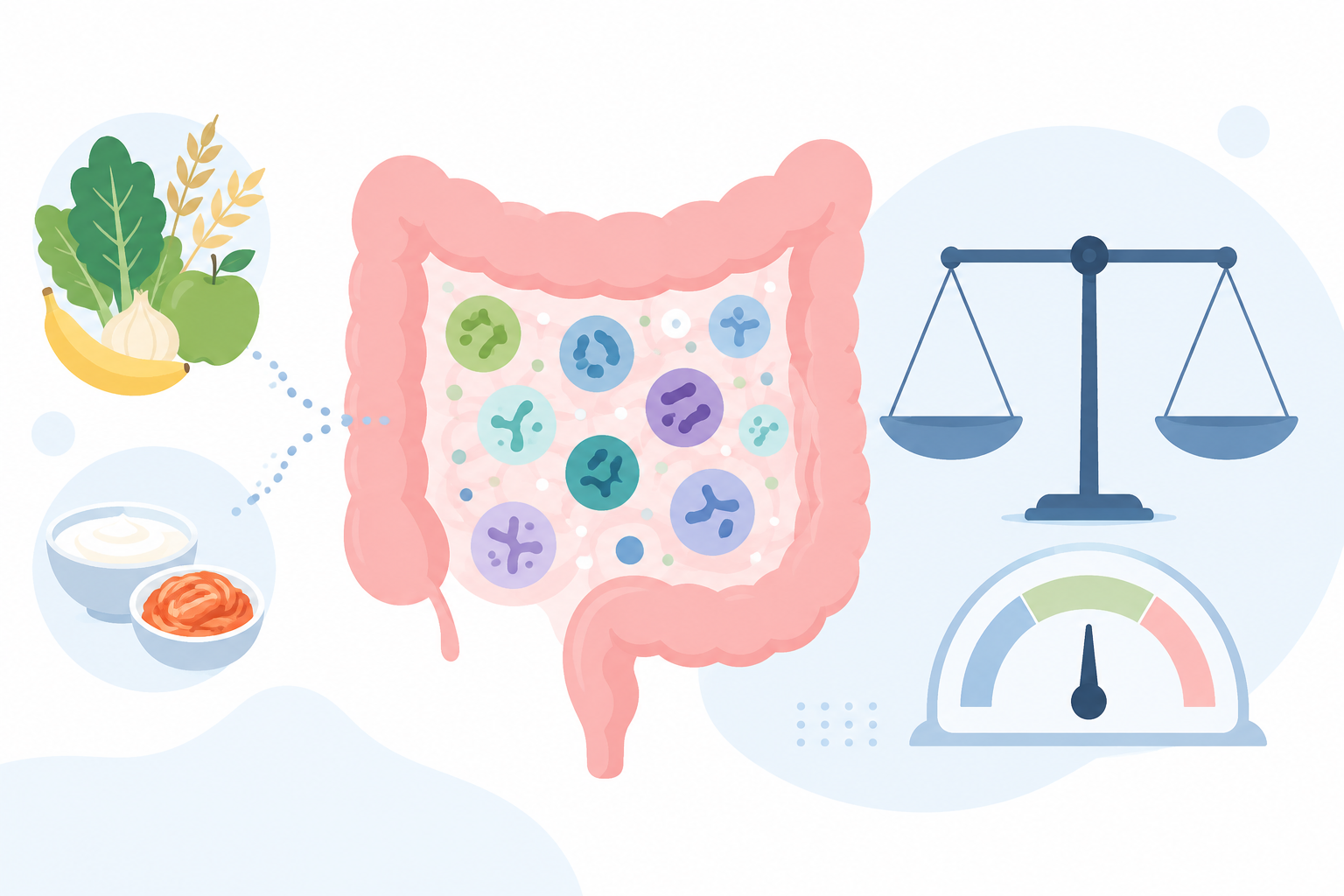
    Probiotics for weight loss research: educational illustration of the gut microbiome and variable metabolic health outcomes
    Gut biology may help explain why probiotics are being studied, but current human results remain variable and modest.

    How to judge a probiotic claim without getting misled

    1. Identify the exact outcome. “Supports gut health” is not the same as reducing body weight, waist circumference, blood glucose, or cardiovascular risk.
    2. Look for strain-level information. A genus name such as Lactobacillus is not enough to reproduce a study. The strain designation and dose should be clear.
    3. Check the comparator. A placebo-controlled randomized trial is more informative than a testimonial or an uncontrolled before-and-after story.
    4. Ask how large the effect was. A statistically significant result can still be too small to matter to a person’s health or daily life.
    5. Check the duration. A few weeks of supplementation cannot establish durable weight maintenance or long-term safety.
    6. Separate an association from a treatment effect. People with different body weights can have different microbiome profiles, but that does not prove that changing the profile will cause weight loss.

    Food, fiber, and probiotics: what should come first?

    For most adults, the most useful first step is to improve the overall dietary pattern rather than chase a single organism. Beans, lentils, vegetables, fruit, whole grains, nuts, and seeds provide fiber and a broad range of fermentable substrates. A gradual increase is more comfortable than a sudden large dose, especially for people who already experience bloating.

    Protein-rich foods, regular movement, resistance training, adequate sleep, and a calorie pattern that can be maintained over time have more practical importance for weight management. People using an FDA-approved obesity medication should not stop or change it because a supplement advertisement makes a stronger promise. If nausea, constipation, diarrhea, or appetite changes are affecting treatment, discuss those symptoms with the prescribing clinician.

    For context, our guide to insurance coverage for weight-loss medication explains how evidence-based prescription treatment differs from supplement marketing. Readers interested in metabolic monitoring can also see our cash-price guide to continuous glucose monitors.

    Who should ask a clinician before taking a probiotic?

    Most healthy adults tolerate common probiotic products, and gas or temporary bloating are the most typical complaints. However, NIH guidance notes that serious infections have been reported, particularly among people who are severely ill or immunocompromised. People with a central venous catheter, critical illness, major immune suppression, or a complex medical history should not assume that a supplement is risk-free.

    The FDA has also warned health care professionals about the risk of severe, potentially fatal infections in premature infants given probiotics. This is a reminder that “natural” is not a synonym for universally safe. Infants, people receiving intensive medical care, and anyone with significant immune or gastrointestinal disease need individualized advice.

    Ask a pharmacist or clinician before starting a product if you are pregnant, caring for a child, recovering from a serious illness, taking immunosuppressive medication, or using multiple supplements. Seek medical care for persistent vomiting, blood in the stool, severe abdominal pain, dehydration, fever, or rapidly worsening symptoms.

    Are probiotics regulated like medications in the United States?

    No single regulatory category covers every product called a probiotic. NCCIH explains that the FDA may regulate a product as a dietary supplement, food ingredient, or drug depending on its intended use. Many probiotic products are sold as dietary supplements, which do not require FDA approval before marketing in the same way an approved drug does.

    The FDA regulates dietary supplements under a different framework from conventional foods and drug products. Manufacturers and distributors are responsible for evaluating safety and labeling, while the agency can act against adulterated or misbranded products after they reach the market. A supplement label may make certain structure/function statements, but disease-treatment claims are subject to stricter requirements.

    That difference explains why a product can be legally sold without having proved that it causes weight loss. Look for transparent labeling, a lot or expiration date, storage instructions, and an independent quality-testing program when available. These steps do not prove efficacy, but they can reduce avoidable uncertainty about the product itself.

    A practical decision checklist

    • What problem am I trying to solve: diarrhea after antibiotics, constipation, bloating, or weight management?
    • Is there human evidence for this exact strain and outcome?
    • What benefit would be large enough to justify the cost?
    • Could food, fiber, hydration, medication review, or medical evaluation address the problem more directly?
    • Do I have a condition or medication that makes infection or interaction risk more important?
    • How will I decide whether to stop if there is no meaningful benefit?

    Frequently asked questions

    What is the best probiotic for weight loss?

    There is no evidence-based universal winner. The 2026 review found variable products and preliminary, modest signals rather than a dependable weight-loss effect. A strain studied for one digestive outcome should not be assumed to work for weight management.

    Can probiotics reduce belly fat?

    Some earlier trials reported small changes in visceral fat or waist-related measures, but findings are inconsistent. The latest evidence does not justify promising a reliable reduction in belly fat from a general probiotic supplement.

    How long should I take a probiotic for weight loss?

    There is no validated duration for weight loss. The newest randomized studies were generally short, around eight to 12 weeks, and did not establish durable weight maintenance. Do not continue indefinitely without a clear goal and a clinician’s input when medical conditions are involved.

    Can I take a probiotic with a GLP-1 medication?

    Do not assume that combining them improves weight loss. Review the specific product and your symptoms with the prescribing clinician or pharmacist, particularly if you have vomiting, diarrhea, constipation, dehydration, or significant abdominal pain.

    Are fermented foods the same as probiotic supplements?

    No. Some fermented foods contain live microorganisms, but the organisms and amounts vary. A supplement is also not automatically better. Choose the option that fits your overall diet, tolerance, budget, and health goals.

    Bottom line

    Probiotics for weight loss are scientifically interesting but not a proven shortcut. The best current evidence points to no reliable reduction in body weight and, at most, small and uncertain changes in BMI or fat-related measures over short periods. Treat probiotic claims as strain-specific questions, keep the expected benefit realistic, and prioritize interventions with stronger evidence for your actual goal.

    Sources and further reading


    Written and edited by: Denny Jaeyong Choi (JD), INSEAD MBA.
    Scientific advisory input: Pierre Theurey, PhD — RockBio co-founder and metabolic-science advisor.

    Medical information disclaimer: This article is for general education and does not replace individualized medical advice, diagnosis, or treatment. Product formulations, evidence, and safety information can change. Consult a qualified health professional before starting a supplement, especially if you have a medical condition, take prescription medicines, or are caring for an infant.