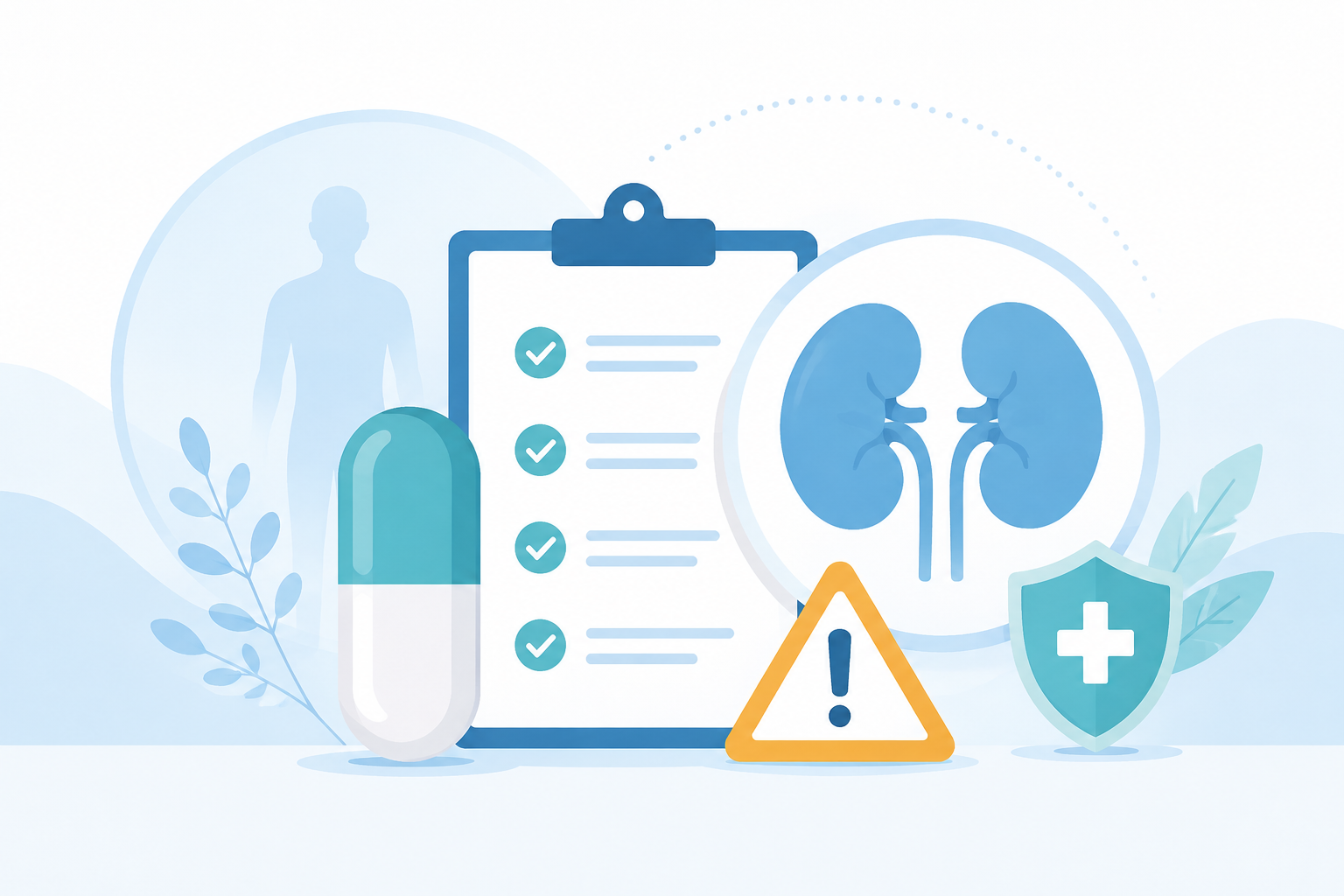
Quick answer: The alli kidney warning is a 2026 FDA label update. In June 2026, the FDA approved updated labeling for alli (orlistat 60 mg), the only FDA-approved over-the-counter weight-loss aid in the United States, to warn about rare reports of kidney injury and kidney stones. This does not mean every person who takes alli will develop a kidney problem. It does mean that people with a history of kidney disease or kidney stones should ask a health professional before using it, and anyone who develops severe back or groin pain, painful urination, blood in the urine, swelling, or noticeably less urine should stop and seek medical advice.
Published September 7, 2026 · Last updated September 7, 2026
The FDA update matters because alli is sold without a prescription. People may start it after reading a package label or speaking with a pharmacist rather than having a full medication review. This is not a recall and does not say that alli is ineffective. It is a safety update that gives consumers more information before deciding whether the potential benefit is worth the possible risk.
Alli kidney warning: what changed in 2026?
On June 10, 2026, the FDA announced changes to the Drug Facts label for alli (orlistat) 60 mg. The revised labeling warns about rare reports of acute kidney injury, hyperoxaluria, calcium oxalate kidney stones, and oxalate nephropathy. The risk information is now aligned across approved orlistat products, including the prescription-strength product Xenical.
The FDA reviewed reports from its adverse-event monitoring system and the medical literature from alli’s approval in 2007 through the end of 2023. It identified 12 cases involving kidney complications after alli use: nine from the monitoring system and three from published literature. Eight people were hospitalized and five required dialysis. These reports cannot prove that alli caused every event, and some people also had possible risk factors such as obesity, diabetes, high blood pressure, or previous kidney disease. Still, the pattern was strong enough to justify a label change.
Because adverse-event reports are incomplete and voluntary, the 12 cases are not the rate of kidney injury among all alli users. They are a safety signal that helps regulators and clinicians identify a rare but potentially serious problem. The FDA also says the risk may not be limited to the higher prescription dose.
How does alli work?
Alli contains orlistat 60 mg. Orlistat is a lipase inhibitor: it blocks some enzymes that break dietary fat into smaller molecules the intestine can absorb. As a result, part of the fat in a meal passes through the digestive tract rather than being absorbed. Alli is approved for weight loss in adults with overweight when used with a reduced-calorie, low-fat diet; it is not intended for people who are not overweight.
Taking more fat in a meal does not make alli work better. It generally makes gastrointestinal side effects more likely. The official product labeling tells users to follow a reduced-calorie, low-fat eating pattern and not exceed the labeled dose. Read the current package insert rather than relying on an old blog post or social-media video.
Orlistat can also reduce absorption of some fat-soluble vitamins and beta-carotene. The consumer label includes instructions about a daily multivitamin taken at a separate time. Ask a pharmacist how to schedule it with your other medicines and supplements.
How could orlistat be connected to kidney stones or kidney injury?
The concern described by the FDA involves oxalate. Oxalate is present in some foods and can also be produced by the body. Under some circumstances, more oxalate may be absorbed from the intestine and filtered by the kidneys. When oxalate combines with calcium in the urinary tract, it can contribute to calcium oxalate kidney stones. Oxalate crystals can also accumulate within the kidney and interfere with kidney function, a condition called oxalate nephropathy.
This is a biologically plausible explanation, not a claim that every user will experience it. Individual risk may be influenced by kidney function, prior stones, hydration, diet, other medicines, and underlying illness. The FDA’s review did not establish a simple dose-response relationship. That is why the updated warning matters even for the nonprescription 60 mg product.
Who should talk with a health professional before using alli?
The FDA specifically advises people who have ever had kidney disease or kidney stones to ask a health care provider before taking alli. A pharmacist can be a useful first point of contact for an over-the-counter medicine, especially when the question is about interactions or whether a history listed on the label changes your risk.
- Reduced kidney function, recurrent stones, hyperoxaluria, or oxalate-related kidney disease.
- An organ transplant or medicines that suppress the immune system.
- A condition that affects absorption of food or fat.
- Cyclosporine, levothyroxine, seizure medicine, warfarin, diabetes medicine, or several supplements.
- Pregnancy, breastfeeding, or considering alli for someone under 18.
- Symptoms that might already represent a kidney, gallbladder, liver, or gastrointestinal problem.
MedlinePlus advises patients to tell their clinician about kidney stones, diabetes, gallbladder disease, pancreatitis, thyroid disease, eating disorders, and other medical conditions before taking orlistat. It also lists important timing and interaction considerations for cyclosporine and levothyroxine. Review the current label and your medication list with a pharmacist.
Which symptoms matter after the alli kidney warning?
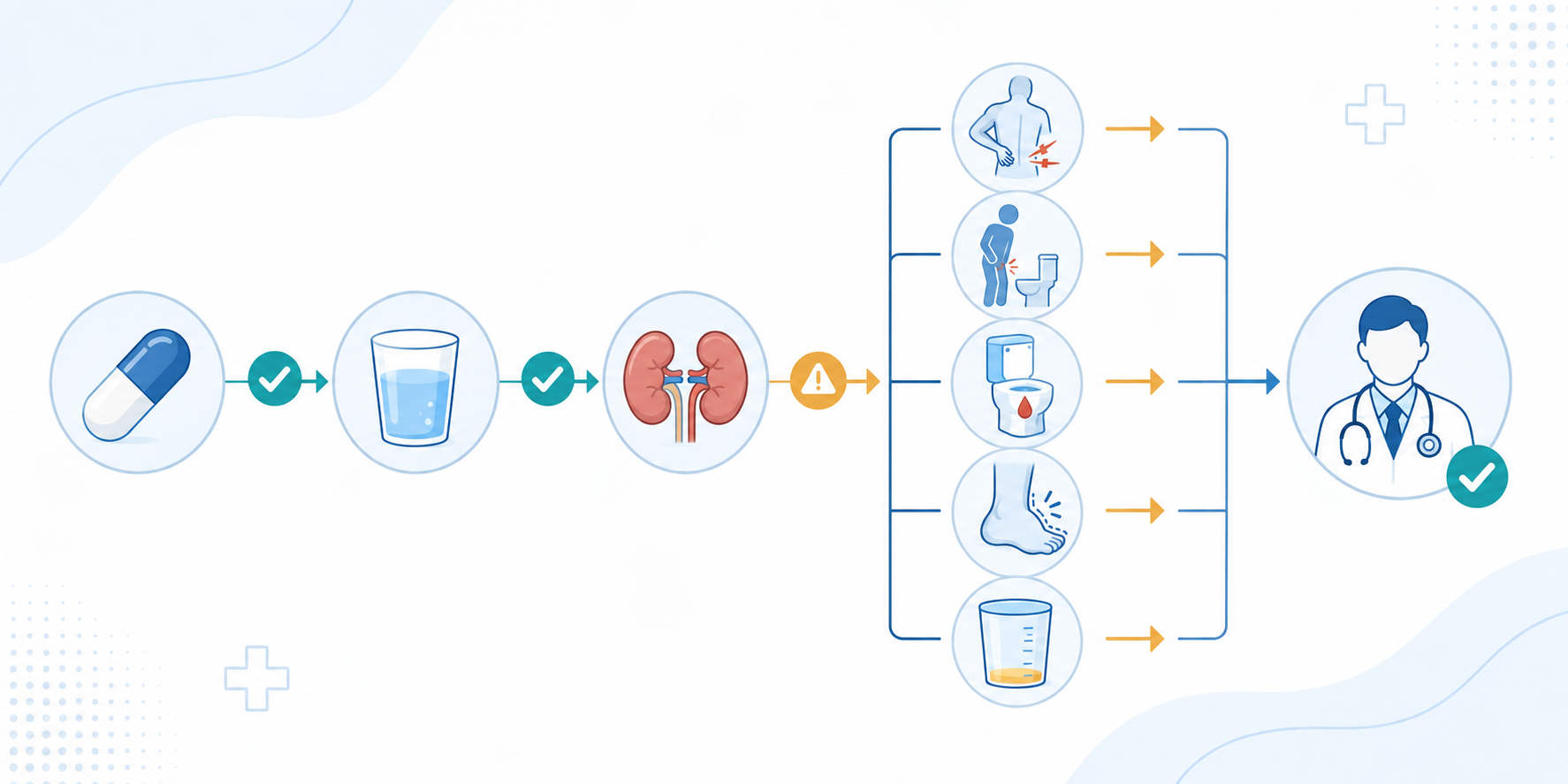
The current alli Drug Facts label says to stop using the product and ask a doctor if you develop severe or continuous abdominal pain, or symptoms that could indicate kidney injury or a kidney stone. The FDA lists these kidney-related warning signs:
- Severe pain in the back or groin.
- Painful urination.
- Blood in the urine.
- Swelling of the feet or legs.
- Urinating less often than usual.
These symptoms are not specific to alli and can have many causes. The point is not to diagnose yourself from a checklist. It is to avoid continuing a potentially relevant medicine while waiting to see whether a serious symptom goes away. Seek urgent care for severe pain, inability to urinate, heavy blood in the urine, fainting, confusion, trouble breathing, or rapidly worsening swelling.
What should you do after an alli kidney warning?
- Check the active ingredient and dose. Confirm whether your product contains orlistat 60 mg and compare its instructions with the current Drug Facts label.
- Review your medical history. If you have had kidney stones or kidney disease, contact a pharmacist or clinician for individualized advice.
- Review every medicine and supplement. Include vitamins, diabetes medicines, thyroid medicine, seizure medicine, transplant medicine, and other weight-loss products.
- Use the intended diet. Do not treat alli as permission to eat a high-fat diet. A lower-fat calorie-controlled pattern reduces predictable gastrointestinal side effects.
- Know your stop rules. If warning symptoms appear, stop and seek medical advice rather than taking another dose to test what happens.
- Reassess benefit. If the medicine is not helping or side effects make it difficult to continue, ask what alternative plan is appropriate.
Do not combine alli with another weight-loss medicine or an unregulated fat blocker without professional guidance. “Natural” does not guarantee that a supplement is safe for the kidneys, and stacking products makes it harder to identify the cause of a side effect.
How does alli compare with prescription weight-loss treatment?
Alli and prescription obesity medicines are different interventions. Alli reduces absorption of some dietary fat in the gut. Prescription options may work through appetite, satiety, glucose regulation, or other mechanisms, and they have their own eligibility criteria, contraindications, side effects, and coverage rules. A comparison based only on price or a testimonial can miss the clinical question: which treatment is appropriate for this person’s health risks and goals?
Our guide to insurance coverage for weight-loss medication explains why a prescription may be covered for one indication but excluded for another. Our Medicare GLP-1 Bridge guide covers a separate CMS pathway and should not be confused with OTC alli. If you are considering a supplement for gut health, our evidence review of probiotics for weight loss explains why a plausible mechanism is not the same as a proven outcome.
What the FDA update does—and does not—mean
| Question | Practical interpretation |
|---|---|
| Is alli being recalled? | The FDA announcement describes a labeling change, not a general recall. |
| Does every user need kidney testing? | Not automatically. A clinician can decide based on symptoms, history, and risk factors. |
| Is kidney injury common? | The FDA describes it as rare. The 12 reports are safety signals, not an incidence rate. |
| Does the warning prove alli never works? | No. It adds risk information; it does not remove the approved use with diet and exercise. |
| Can someone with prior stones start it alone? | The FDA advises asking a health professional before use. |
Alli kidney warning: questions to ask a pharmacist
- Does my history of kidney stones, reduced kidney function, diabetes, or high blood pressure change the risk?
- Could any current medicine interact with orlistat?
- Should I take a multivitamin, and when should it be separated from other medicines?
- What symptoms should prompt me to stop immediately or seek urgent care?
- What amount of weight loss or health improvement would make continuing worthwhile?
- What evidence-based alternatives fit my medical history and insurance situation?
Frequently asked questions
Is alli safe after the alli kidney warning?
Do not assume that it is safe to start on your own. The FDA specifically advises people with a history of kidney disease or kidney stones to ask a health care provider before using alli. Prior stone type, kidney function, hydration, diet, and other medicines may matter.
Should I stop alli if I have mild stomach side effects?
Mild gastrointestinal effects can occur because orlistat changes how dietary fat is handled. Follow the current label and ask a pharmacist if symptoms persist, are severe, or interfere with daily life. Severe or continuous abdominal pain and kidney warning signs require medical advice.
Can I take alli with a GLP-1 medication?
Do not combine them without the prescribing clinician or pharmacist reviewing the plan. There is no general rule that combining weight-loss medicines improves results, and overlapping gastrointestinal effects can complicate safety monitoring.
Does drinking more water eliminate the kidney risk?
No. Adequate hydration is generally important for health, but it cannot guarantee prevention of a medicine-related kidney problem. Do not use extra water as a reason to ignore pain, blood in the urine, swelling, or reduced urination.
Is alli the same as Xenical?
Both contain orlistat, but alli is the 60 mg nonprescription product and Xenical is the higher-strength prescription product. They are not interchangeable instructions. Use the label and prescription directions for the exact product you have.
Bottom line
The 2026 alli kidney warning makes the safety conversation around this medicine more complete. Kidney injury and kidney stones appear to be rare, but the possible complications can be serious. People with a history of kidney disease or kidney stones should ask a professional before starting, and anyone who develops severe back or groin pain, painful urination, blood in the urine, swelling, or less frequent urination should stop and seek medical advice. Treat alli as a medicine—not a harmless shortcut—and weigh its potential benefit against your personal risks, other treatments, and long-term weight-management plan.
Sources and further reading
- U.S. FDA: 2026 alli kidney warning and kidney-injury labeling update
- DailyMed: current ALLI (orlistat) 60 mg consumer drug label
- MedlinePlus: Orlistat drug information and interactions
- NIH NIDDK: Kidney stones
Written and edited by: Denny Jaeyong Choi (JD), INSEAD MBA.
Scientific advisory input: Pierre Theurey, PhD — RockBio co-founder and metabolic-science advisor.
Medical information disclaimer: This article is for general education and does not replace individualized medical advice, diagnosis, or treatment. Medication labels and regulatory guidance can change. Consult a qualified health professional before starting, stopping, or combining medicines, especially if you have kidney disease, kidney stones, take prescription medicines, or are pregnant or breastfeeding.